


If your hair is snapping, tangling, or feels like straw after color, the fix isn’t chasing another brand’s version of Olaplex. It’s matching the actual chemistry to your damage. For structural breakage and long-term rebuild, a covalent grafting polypeptide system like QAI Hair’s PolyGraft-9 approach outperforms surface-level bond builders because it targets the cortex directly rather than coating the outside. For milder frizz or upkeep between salon visits, a maleic acid or peptide-based option works fine. The category breakdown below tells you which is which.
TL;DR:
- Covalent grafting polypeptide systems like QAI Hair’s PolyGraft-9 target the hair cortex for long-lasting repair, unlike surface-level bond builders or masks.
- Acid-based bond builders such as maleic acid and citric acid are effective for quick internal bond reform but do not support structural rebuilding for severely damaged hair.
- To choose the right treatment, assess damage by testing hair elasticity, focusing on damage types like bleach, heat, porosity, or protein overload before selecting a product.
- Price efficiency depends on application amount and frequency; professional treatments are deeper but cost more upfront, while at-home products require proper technique to maximize value.
- A noticeable decline in benefits from regular protein treatments signals a need to switch to moisture or acid-based routines, especially for brittle or stiff hair.
What Counts as a Real Olaplex Alternative?
Not every “bond builder” on a drugstore shelf actually builds anything. The honest way to sort Olaplex alternatives is by what the ingredients do to the hair fiber, not by what the label promises.
Four categories dominate the market, and each behaves differently once it’s on your hair.
- Peptide biomimetics. These use small protein fragments engineered to attach to the hair’s keratin structure. Covalent grafting takes this further by forming a chemical bond rather than a temporary surface attachment, which is the mechanism behind QAI Hair’s PolyGraft-9 technology. Look for “polypeptide,” “amino acid complex,” or “biomimetic protein” on labels.
- Low-pH systems. These close the hair cuticle and smooth the surface, which improves shine and reduces frizz but does nothing for internal bond damage.
- Protein and coating masks. These sit on the hair shaft, temporarily filling gaps in the cuticle. They deliver fast softness but wash out in a few shampoos and can stiffen hair if overused.
Application format matters as much as the chemistry. Leave-in peptide treatments tend to show gradual improvement over several uses, while rinse-out acid-based bonders often show a visible change the same day, especially right after a bleach service. Coating masks give the fastest, most temporary win. Price ranges swing wildly too. Drugstore acid-based bonders often run $8 to $15 an ounce, while professional peptide systems can run two to three times that, reflecting the added R&D behind the actives and the depth of penetration they claim to achieve.
The trade-off is consistent across the market: speed versus durability. A coating mask feels amazing for three days and fades fast. A covalent-bonded peptide treatment takes longer to show its full effect but changes the fiber at a level shampoo cannot undo.
How Do You Know Which Chemistry Your Hair Needs?
Start by looking, not guessing. Take a strand of wet hair and stretch it gently between two fingers. Hair with healthy elasticity springs back. Hair that stretches thin, feels gummy, or snaps outright is telling you something specific about the kind of damage you’re dealing with.
Run through this checklist before buying anything:
- Bleach or chemical damage. Strands feel gummy when wet, look translucent at the ends, and tangle into knots you have to cut out. This calls for a peptide or covalent bonding approach that rebuilds the internal structure, not a surface mask.
- Heat or mechanical damage. Breakage concentrates at the mid-shaft and ends, with visible split ends and frizz that heat protectant doesn’t fix. A maleic acid bond builder paired with a moisture-focused leave-in usually helps here.
- Porosity imbalance. Hair either repels water and product (low porosity) or absorbs everything and dries out fast (high porosity). This needs a porosity-specific routine before you layer on any bond treatment. QAI Hair’s porosity testing routine walks through a two-week test to confirm which side you’re on.
- Protein overload. Hair feels stiff, straw-like, and brittle despite recent conditioning. This is a sign you’ve been overusing protein-heavy products and need to swap in a moisture or acid-based treatment for a cycle or two, a pattern covered in QAI Hair’s protein overload guide.
Once you know your profile, matching it to a category gets simple. Severe structural damage points toward covalent grafting polypeptide systems. Surface frizz and dullness point toward acid-based bonders. Dryness and porosity issues point toward moisture-forward routines before any bond treatment goes on.
When you’re reading a label or talking to a stylist, ask three things: what specific molecule does the bonding (not just “bond-building complex”), how long the product needs to sit to work, and how often you can safely use it without stacking protein on top of protein.
Pro Tip: If you can’t find the actual active ingredient name on the front of the bottle, flip it over. A real bond builder lists its bonding agent in the first five ingredients, not buried after fragrance and preservatives.
Getting the Best Value From Any Bond Treatment
Sticker price is a bad way to compare hair treatments. Cost-per-ounce and how much product a single application actually requires tell you the real story. A $40 treatment that needs a dime-sized amount to cover your whole head can beat a $15 bottle that requires a quarter-sized dollop every time.
Rinse-out treatments and leave-ins also carry different usage math. A leave-in mist gets used daily or every other day in small amounts, so a single bottle can stretch for months. A rinse-out reconstructing masque is meant for weekly or biweekly deep treatments, so it lasts longer per use even though the bottle looks smaller.
A few habits stretch your investment further:
- Apply reconstructing masques to towel-dried, not soaking wet, hair. Excess water dilutes the treatment and you end up using more product to compensate.
- Alternate protein-forward treatments with moisture-forward ones. Back-to-back protein treatments are the single most common cause of the stiff, brittle feeling people mistake for “over-repaired” hair.
- Don’t double up categories in the same wash. Layering a protein mask on top of an acid-based bonder the same day usually wastes product without adding benefit.
Editorial price comparisons across the bond-builder market consistently show that dosing habits, not the price tag, determine which product actually delivers better value over a bottle’s lifespan. A cheaper product used correctly beats an expensive one used wastefully every time.
Is Olaplex Safe? Lawsuit Context and Ingredient Myths
Olaplex faced a 2022 class-action lawsuit alleging that certain ingredients caused hair loss, scalp irritation, and allergic reactions for some users, though the claims centered on undisclosed ingredient risks rather than a proven, widespread safety failure. The company has denied the allegations. The episode is a useful reminder to read ingredient lists on any bond-building product, not just Olaplex, since formulations change over time and a product you trusted two years ago may not be the same formula today.
A few myths are worth clearing up directly:
- “Dupe” doesn’t mean “same chemistry.” A cheaper product might use a completely different bonding molecule than the one it’s mimicking. Similar marketing language doesn’t guarantee a similar mechanism.
- Drugstore doesn’t mean weak. Maleic acid and citric acid bonders sold at mass retailers can be genuinely functional if the active is present at an effective concentration, not just listed near the bottom of the ingredient panel.
- “Clinically tested” is a marketing phrase, not a certification. Ask what was tested, on how many people, and for how long before taking that claim at face value.
Why Covalent Grafting Polypeptide Technology Changes the Repair Equation
Most bond builders work on the surface or reform a limited set of internal bonds. Covalent grafting works differently: PolyGraft-9 forms a permanent chemical bond with the hair’s existing structure, reaching what QAI Hair describes as all three layers of the fiber, cuticle, cortex, and the deeper structural matrix, rather than sitting on top as a temporary patch.
The distinction between a surface treatment and a covalent bond is the difference between gluing a crack shut and actually regrowing the material around it. Once PolyGraft-9 grafts onto the hair’s structure, it isn’t designed to rinse out the way a coating mask does.
This matters most for hair that’s been through repeated bleach sessions, chronic heat styling, or a botched chemical service. Surface conditioners can make that hair feel soft for a day. A structural rebuild is what keeps it from snapping the next time you brush it out. Professional application, done by a stylist trained in the covalent bonding process, tends to deliver a deeper, more even result than a home treatment alone, particularly for severely compromised hair or hair that needs color-locking after a corrective service.
Home-use QAI products aren’t a replacement for that professional step when the damage is severe. They’re the maintenance layer that keeps the structural work intact between visits, the same way a dentist’s filling still needs you to brush afterward. For moderate damage, the at-home PolyGraft-9 products can do the heavy lifting on their own.
Getting Started With QAI Hair: Two Starter Routines
Pick your entry point based on how far gone your hair actually is, not on what feels like the “safe” middle option. Two routines cover most damage profiles.
Home-only routine, for moderate damage or maintenance: Start with QAI Tiger Reconstructing Shampoo to clean without stripping, follow with the QAI Tiger Reconstructor Masque once or twice a week for deep structural repair, and finish with QAI Tiger Moisture Mist as a daily leave-in to keep porosity balanced between treatments. If you’re managing frizz on top of repair, the QAI Texture Ultra Light Styling Cream finishes the routine without weighing hair down.
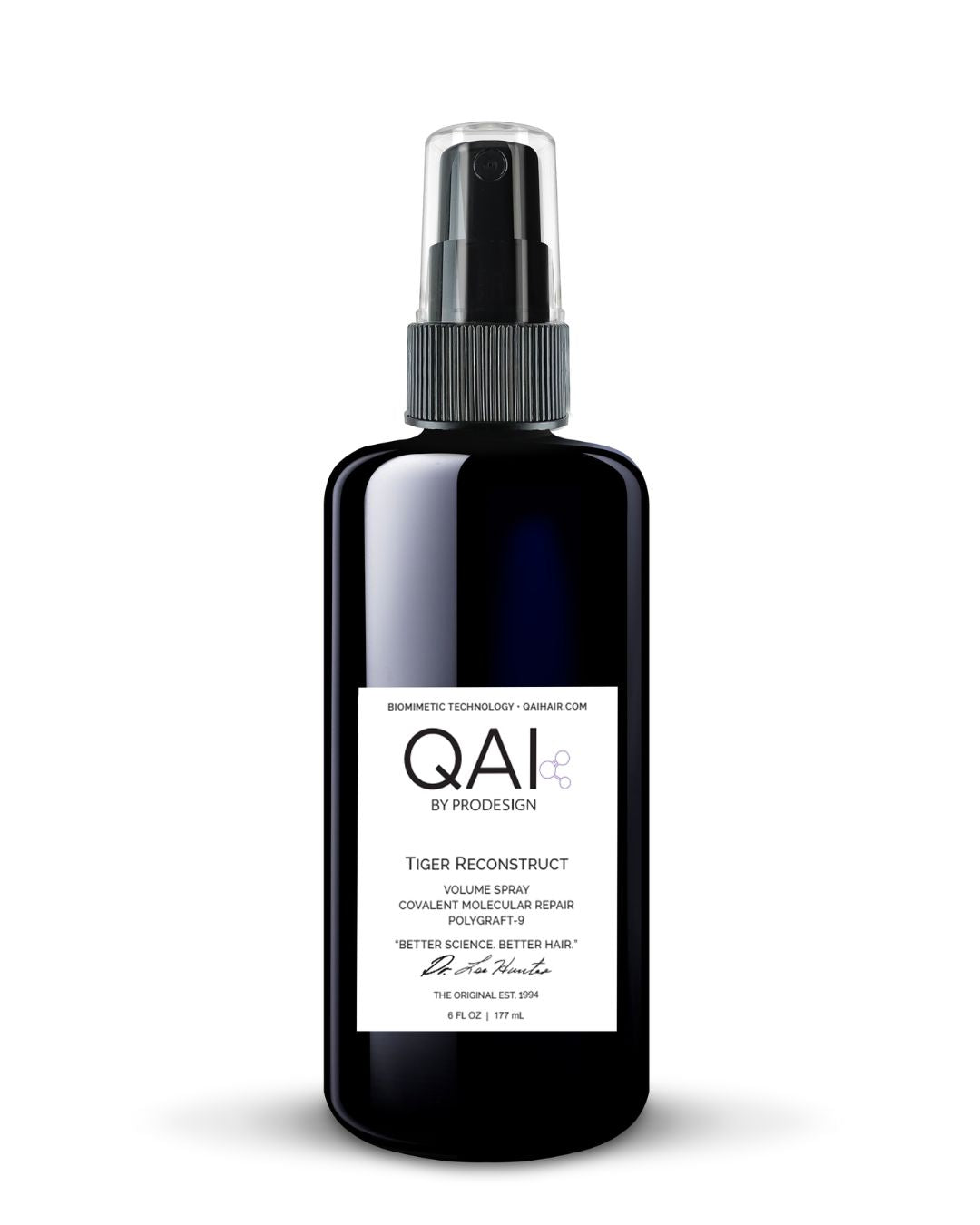
Professional plus home-maintenance routine, for severe or chemically compromised hair: Book a covalent grafting service with a certified stylist for the initial structural rebuild, then maintain results at home with QAI Tiger Reconstruct and QAI Liquid Hair for targeted upkeep between visits. Rinse with QAI Cleanse Shampoo beforehand to prep the hair for better product absorption.
Either way, the goal isn’t to buy every product in the lineup. It’s to identify your damage type, start with the one or two products that actually match it, and build from there. Full details on the Formaldehyde-Free Blow-Outs, Permanent Keratin Repair, and corrective services are available directly through QAI Hair for readers who want the professional route first.
A Stylist’s Take on When to Switch Approaches
Bond-builder habits are worth keeping if your hair is stable and you’re just maintaining color-treated or lightly damaged strands. That’s a maintenance problem, and a peptide leave-in or occasional masque handles it fine indefinitely.
The switch point comes when you notice diminishing returns. If you’ve been using the same protein-heavy product for months and hair still feels stiff or brittle, you’re not under-treating, you’re likely overloading protein and need an acid-based or moisture cycle instead.
Space professional treatments every 6 to 8 weeks for chemically active hair, with home maintenance filling the gaps daily or weekly depending on the product. And before layering a new bond-modifying treatment onto an existing routine, ask a stylist what’s already on your hair. Two well-intentioned treatments stacked together can cancel each other out or, worse, overload the fiber.
— Kollin Gessler
Sources
The safety and lawsuit context in this guide draws on Business Insider’s reporting on Olaplex dupes, which documents the 2022 legal claims and surveys the current field of bond-builder alternatives. Background on peptide and protein cross-linking mechanisms comes from a peer-reviewed cosmetic chemistry review and PubMed research on molecular approaches to hair repair, both of which inform how bond-repair claims should be evaluated.
For readers who want the deeper science behind covalent grafting itself, QAI Hair’s own breakdown, First Covalent Grafting Polypeptide, explains how PolyGraft-9 was developed and how it differs from earlier bond-building chemistry. It’s the primary technical source behind the structural-repair claims made throughout this guide.
- Business Insider: Best Olaplex dupes
FAQ
Why Is There a Lawsuit Against Olaplex?
A 2022 class-action lawsuit alleged that certain Olaplex ingredients caused hair loss, scalp irritation, and allergic reactions for some users, centering on claims of undisclosed ingredient risks, according to Business Insider’s coverage. Olaplex has denied the allegations, and the case underscores why checking current ingredient lists on any bond-building product matters.
What Can I Use Instead of Olaplex Conditioner?
For structural damage, a covalent grafting polypeptide treatment like QAI Hair’s PolyGraft-9 based products targets the cortex directly rather than just coating the surface. For lighter maintenance, a maleic or citric acid bond builder paired with a moisture-focused leave-in covers most everyday needs.
Is There a Budget Version of Olaplex Available?
Yes. Several maleic acid and citric acid bond builders sold at mass retailers use functionally similar bonding chemistry at a fraction of the price, according to Business Insider’s roundup of Olaplex dupes. The trade-off is usually depth of penetration and how the product is processed, not whether the chemistry works at all.
Is K18 or Olaplex Better?
Both use peptide-based chemistry aimed at rebuilding hair bonds, but neither uses the covalent grafting mechanism that permanently bonds to the hair’s structure the way QAI Hair’s PolyGraft-9 approach does. For severe structural damage, a covalent grafting treatment is designed to deliver a deeper, longer-lasting rebuild than either standard peptide formula.
How Much Does QAI Hair’s Covalent Grafting Treatment Cost?
Pricing for professional covalent grafting services and individual QAI Hair products is listed directly on the QAI Hair website, since it varies by service type and product line. Check the product pages for current pricing before booking or ordering.

