


Porosity measures how easily your hair shaft absorbs and holds moisture. Low porosity hair has tightly packed cuticles that resist water entry but hold onto it once it gets in. High porosity hair soaks up moisture fast because the cuticle sits lifted or damaged, then loses it just as quickly. If your hair feels dry minutes after a leave-in, you’re probably dealing with high porosity and need to seal with oils. If products sit on top of your strands without absorbing, that’s low porosity, and heat or steam will help open the cuticle.
TL;DR:
- If your hair floats near the water surface for several minutes, you likely have low porosity, which requires steam and clarifying treatments to absorb moisture.
- High porosity hair often dries quickly and absorbs water instantly, but it needs sealing with oils and protein treatments to retain moisture effectively.
- Medium porosity strands typically absorb about 75% of water in four minutes, serving as a benchmark to identify faster or slower absorption patterns.
- Testing multiple methods like float, spray, finger-rake, and drying time yields a more accurate assessment of porosity, especially after chemical or heat damage.
- Consistent use of porosity-specific products, like covalent bonding treatments, can improve hair moisture retention over weeks, but severe damage may require professional in-salon care.
What Hair Porosity Actually Means and Why It Drives Product Performance
The cuticle is the outermost layer of the hair shaft, made of overlapping scale-like cells that either lie flat or lift away from the strand. That spacing is the entire story behind porosity. When cuticle scales sit close and fused, water and product molecules struggle to get past them. When those scales are raised, chipped, or missing sections entirely, moisture moves in and out almost unchecked.
Low porosity hair has tightly packed cuticles that resist water and treatment absorption, which is why it often takes longer to wet in the shower and why conditioner can sit on the surface for a full minute before it starts to soak in, according to Healthline. Medium porosity sits in the middle, and lab testing shows it absorbs a substantial portion of its maximum water capacity within minutes, a benchmark researchers use to compare more extreme cases against, based on findings published on PubMed. High porosity hair skips that gradual absorption entirely. Water and pigment molecules rush in past the compromised cuticle, but they rush back out just as fast, which is why high porosity strands lose moisture rapidly and often show inconsistent color results after dyeing, per NYSCC.
This matters beyond just how fast your hair dries. Porosity determines:
- How long you need to leave a deep conditioner on before it actually penetrates
- Whether a protein treatment will strengthen your strands or make them stiff and brittle
- How your hair takes color, since dye molecules follow the same cuticle pathways as water
- Whether lightweight products absorb or just coat the surface and wash out unused
Knowing your porosity turns hair care into a targeted decision instead of a guessing game. Industry voices increasingly frame porosity as the structural variable that explains why the same product works beautifully on one person and does nothing on another, a point echoed in NewBeauty’s coverage of the topic.
How to Test Your Hair Porosity at Home
You don’t need a lab to get a reasonable read on your porosity. A handful of simple tests, used together, give you enough confidence to pick a routine.
- The float test. Take a clean, product-free strand from your brush or comb and drop it into a glass of room-temperature water. Watch it for two to four minutes. A strand that floats near the surface the whole time usually points to low porosity. One that sinks fast suggests high porosity. A strand that hovers in the middle typically signals medium porosity.
- The spray test. Mist a small section of dry hair with water and watch what happens. If the water beads up and rolls off before absorbing, that’s a low porosity signal. If it soaks in almost immediately, you’re likely looking at high porosity.
- The finger-rake test. Slide two fingers up a dry strand from the end toward the scalp. If you feel bumps, rough patches, or a raised texture, the cuticle is likely lifted, which points to high porosity. A smooth glide suggests the cuticle lies flat.
- Drying time. Track how long your hair takes to air dry after a wash. Hair that stays damp for hours often has low porosity; hair that dries unusually fast tends toward high porosity.
None of these tests is perfect on its own. Product residue, hair diameter, and even the oils naturally on your fingers can skew the float and spray tests, and diameter differences alone can make two people with identical porosity get different float results, according to Dyson’s hair science team. Run at least two of these tests before you commit to a routine, and retest every few months if you’ve colored or heat styled recently.
Pro Tip: Wash your hair with a clarifying shampoo before testing. Buildup from styling products can make high porosity hair behave like low porosity in the float test, throwing off your read entirely.
Low Porosity Hair: Why It Resists Moisture and How to Fix That
Low porosity hair announces itself early. It takes forever to get fully wet in the shower, conditioner seems to sit on top rather than sink in, and products tend to build up on the strand instead of absorbing, leaving hair looking coated or greasy days after a wash. The surface often looks shinier than other porosity types simply because the flat, compact cuticle reflects light more evenly.
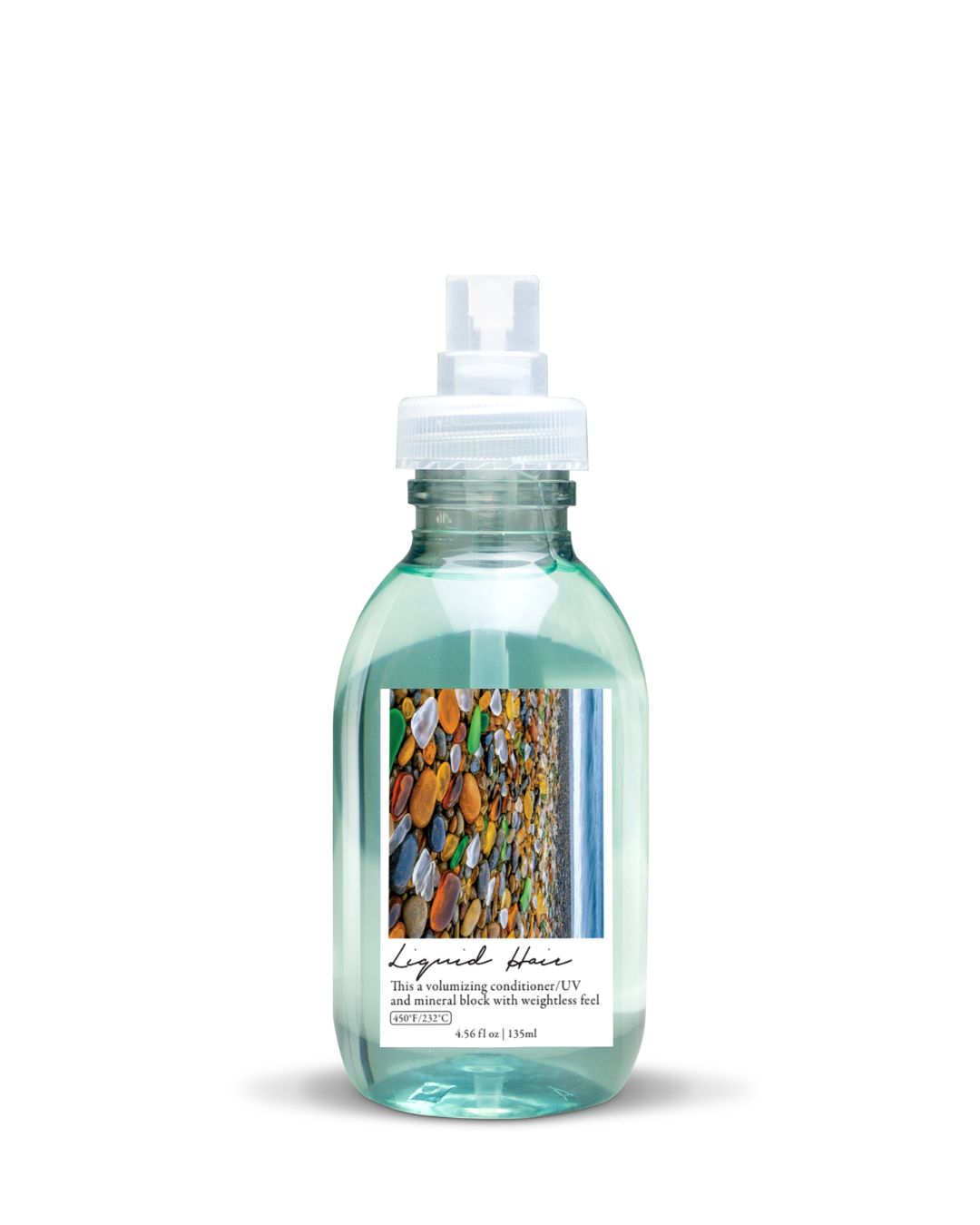
Genetics is the biggest driver here. Some people are simply born with cuticles that lie flatter and closer together. But there’s a second, sneakier cause: product buildup itself can mimic low porosity symptoms in hair that isn’t naturally low porosity at all, layering silicones and heavy creams on top of the cuticle until nothing can get through.
Care for low porosity hair centers on getting past that barrier without overloading the strand:
- Use warm water when washing and conditioning. Heat gently lifts the cuticle enough to let moisture in.
- Add a hooded dryer or steamer session during deep conditioning. Steam-assisted hydration is one of the more reliable ways to help low porosity hair actually absorb what you’re applying, per NYSCC.
- Clarify every one to two weeks to strip buildup before it masks your real porosity.
- Skip heavy butters and thick protein-based creams, which tend to sit on the surface rather than penetrate.
- Reach for lightweight humectants like glycerin and polar oils such as argan or grapeseed, which are more likely to move past the cuticle than heavier alternatives, a distinction consumer guides increasingly emphasize based on climate and hair type, according to PureWow.
Roughly 4 minutes is how long it takes medium porosity hair to absorb about 75% of its water capacity in controlled lab conditions, a useful reference point for how much slower low porosity hair typically performs against that same clock based on PubMed research.
If you’ve tried a consistent steam and clarify routine for a few weeks and your hair still resists moisture, that’s usually a sign the cuticle itself needs professional-level intervention rather than another product swap. A porosity-leveling treatment, done in-salon, works at a structural level that at-home steaming can’t always match.
High Porosity Hair: Why It Loses Moisture Fast and How to Seal It In
High porosity hair tells a different story. It absorbs water and product almost instantly, but that same openness means moisture escapes just as quickly, leaving strands dry within hours of a wash. Frizz shows up fast in humidity, breakage happens more easily under tension, and color often looks duller or fades faster than expected because pigment molecules leak back out through the same gaps that let them in.
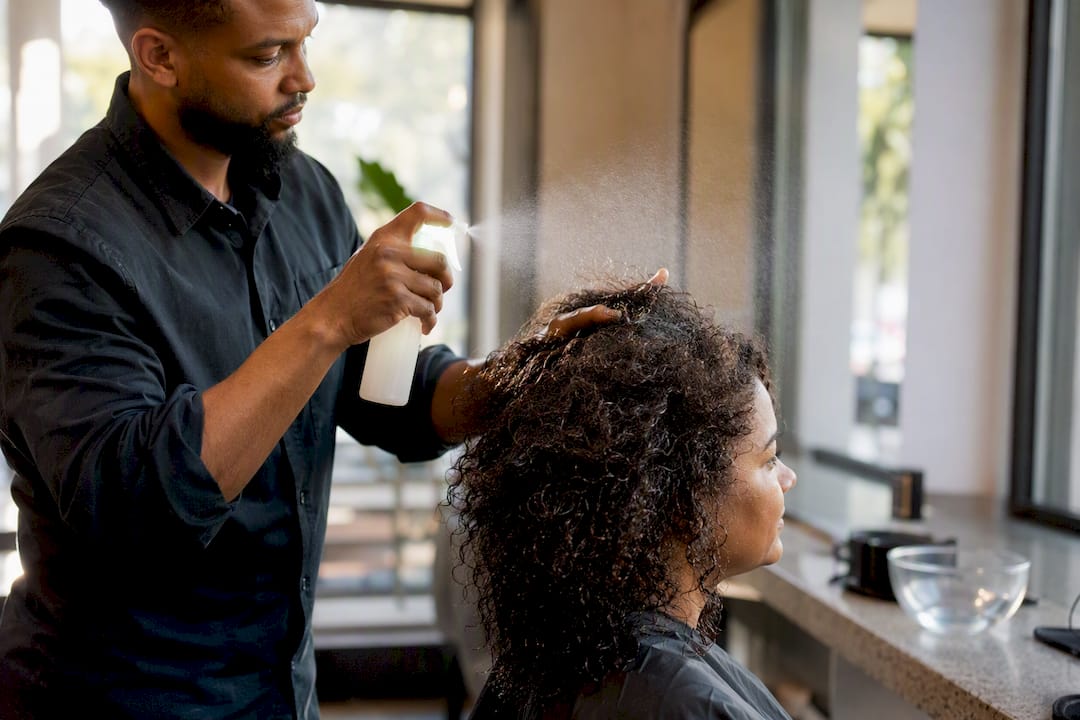
Chemical processing, whether bleach, relaxers, or repeated coloring, is the most common cause. Heat styling and mechanical stress from brushing, tight elastics, or rough towel drying add to the damage over time. Genetics plays a smaller role here too, but acquired damage is by far the bigger factor for most people dealing with high porosity.
The fix isn’t more moisture. It’s moisture that stays put:
- Follow the LOC or LCO method. Apply a liquid or leave-in, then either an oil followed by a cream, or a cream followed by an oil, layering to trap water inside the strand.
- Seal every wash-day routine with an oil suited to your climate. Heavier oils like castor or olive work well in dry air; lighter oils like jojoba perform better in humidity.
- Add a protein treatment every one to two weeks if breakage is frequent, since damaged high porosity hair often lacks the internal protein structure to hold its shape.
- Use LOC/LCO layering and periodic protein treatments together, a combination NYSCC specifically points to for helping high porosity hair retain moisture and rebuild strength.
- Protect strands from UV exposure and minimize direct heat styling, since both accelerate the cuticle lifting that got you here in the first place.
- Go easy on straight humectants like glycerin in high humidity. They can pull in more moisture than damaged cuticles can hold, leading to frizz rather than smoothness.
Pro Tip: If your hair feels dry an hour after applying a leave-in, you’re missing the seal step. Add a few drops of oil over your moisturizer, not instead of it, to lock that hydration in rather than replace it.
Can Porosity Change? What’s Genetic and What You Can Actually Fix
Your baseline porosity is largely genetic, set by how your cuticle cells naturally lie against the strand. But porosity isn’t fixed for life. It shifts, usually upward, through repeated damage.
Hygral fatigue is one of the clearer mechanisms behind this. Repeated swelling and deswelling of the hair shaft, from frequent wetting and drying cycles, mechanically stresses the cuticle over time and gradually raises porosity, a process detailed by NYSCC. Chemical treatments, UV exposure, and aggressive grooming add to that same cumulative wear, a mechanism also documented in broader hair science research on PMC.
Here’s what realistic repair looks like:
- Consistent protein and moisture balance can smooth cuticle scales and reduce breakage within four to six weeks of regular treatment.
- Professional-grade repair treatments work faster, often showing visible improvement in texture and shine after one to two sessions.
- What repair cannot do is reset your genetic baseline. You can smooth a damaged cuticle back toward its natural state, but you can’t turn genetically high porosity hair into genetically low porosity hair.
- Ongoing maintenance matters more than a single fix, since heat, color, and mechanical stress will keep raising porosity if left unchecked.
Set your expectations around weeks, not days, and treat porosity repair as an ongoing practice rather than a one-time treatment.
How QAI Hair’s Science Targets Porosity Repair at the Cuticle Level
Most porosity problems trace back to cuticle damage that surface-level conditioners can’t reach. QAI Hair built its PolyGraft-9 Complex around a different approach: a reactive covalent grafting polypeptide that bonds directly to damaged sites in the cortex and cuticle, detailed in QAI’s first covalent grafting polypeptide research. Instead of coating the strand the way silicones and heavy butters do, the polypeptide forms a permanent bond that helps rebuild structure from the inside.
That science maps cleanly onto the two porosity problems this article has covered:
- QAI Tiger Reconstructing Shampoo clarifies without stripping, a useful first step before deep treatment for either porosity type.
- QAI Tiger Reconstructor Masque delivers deep, cuticle-level repair for high porosity strands weakened by chemical or heat damage.
- QAI Tiger Reconstruct targets structural rebuilding for hair that needs porosity leveling rather than just surface smoothing.
- QAI Tiger Moisture Mist provides lightweight, ongoing hydration that works for low porosity hair between washes and as a sealing step for high porosity hair.
If your at-home tests point to mild imbalance, these products used consistently can shift results within weeks. If your hair shows severe damage, uneven porosity across the head, or resists every routine you try, that’s the point to talk with a stylist about an in-salon porosity-leveling treatment built on the same technology.
Your Two-Week Porosity Routine: What to Do First
- Run the float and finger-rake tests before you buy anything new.
- If low porosity, schedule two steam-assisted deep conditioning sessions this week and skip heavy creams.
- If high porosity, start LOC/LCO layering on wash day and add one protein treatment.
- Retest after two weeks to check if drying time or absorption has shifted.
| Porosity Type | Weekly Focus | Key Treatment to Add |
|---|---|---|
| Low porosity | Warm water washes, steam-assisted conditioning twice weekly | Lightweight humectant, clarify once |
| High porosity | LOC/LCO sealing every wash day | One protein treatment, midweek |
An Evidence-First Take on Porosity Care
Most porosity advice online skips the testing step and jumps straight to product recommendations, which is backwards. You can’t fix what you haven’t diagnosed, and mixed-porosity hair, common after years of coloring or heat styling, makes blanket advice especially unreliable. Run the tests first. Trust the pattern that shows up across two or three methods, not just one glass of water. If your results stay inconsistent or your hair keeps breaking despite a reasonable routine, that’s a signal to bring in a stylist rather than keep swapping drugstore products. Porosity is measurable and manageable, but only if you treat it as a diagnosis rather than a guess.
— Kollin Gessler
Ready to Repair Your Porosity? Start With the Right Product Match
QAI Hair gives you a repair option most drugstore lines can’t match: a covalent bond that rebuilds damaged cuticle and cortex structure instead of just coating it until the next wash. For high porosity hair that’s been through color, heat, or chemical processing, that structural difference is what separates a temporary fix from an actual improvement in how your hair holds moisture week after week.

Start with the QAI Tiger Reconstructing Shampoo to clarify and prep your strands, then follow with the QAI Tiger Reconstructor Masque for deep cuticle repair if your tests point to high porosity damage. If you’re managing low porosity buildup instead, pair a clarifying wash with the QAI Tiger Moisture Mist for lightweight hydration between washes. Shop the full lineup or find a certified stylist offering QAI’s professional treatments near you to get a porosity assessment done right.

