


“Acid treatments for hair” covers three distinct chemistries: mild acid rinses for surface smoothing, amino-acid bonding treatments for temporary strength, and acid straighteners for longer-lasting texture change. The right pick depends on your hair’s chemical history and your goal. Before booking or buying, ask for the ingredient list, pH, and safety data sheet, and always run a strand test first.
TL;DR:
- Citric acid offers measurable reinforcement benefits on chemically treated hair, but its effects diminish within a few washes.
- Acid straightening processes require professional application due to their low pH and high heat, and carry higher damage risks than surface treatments.
- Glyoxylic acid straightening products pose a documented risk of kidney damage and can release formaldehyde, requiring careful safety precautions.
- Mild acid rinses and amino-acid masks are more suitable for maintenance, lasting days to weeks, while straightening can last several months but increases damage potential.
- Always request full ingredient details, confirm proper ventilation, and perform strand tests before any acid-based hair treatment to ensure safety and desired results.
Types of Acid-Based Hair Treatments
Not every “acid treatment” does the same job, and confusing the categories is how people end up disappointed or damaged. The mildest tier includes citric acid, lactic acid, and hyaluronic acid rinses, usually sold as clarifying rinses, leave-in mists, or conditioning masks. These work on the hair’s surface, tightening the cuticle and boosting shine without altering the internal protein structure. Hyaluronic acid in particular acts as a humectant, pulling moisture into the strand and easing detangling, though it can irritate sensitive scalps.
The middle tier is amino-acid bonding treatments, often marketed as “keratin infusions” or “protein smoothing masks.” They deposit small peptide fragments onto damaged sections of the hair shaft, temporarily filling gaps left by bleach or heat damage. Results last through several washes, not months.
The strongest tier is acid straightening, sometimes called a “progressive brush” or acid-based Brazilian treatment. These use compounds like glyoxylic acid at very low pH combined with heat to form a polymer film that reshapes the hair’s texture.
- Mild acid rinses: shine, detangling, surface smoothness, effect fades in days to weeks.
- Amino-acid bonding masks: temporary strength and reduced breakage, lasts through several washes.
- Acid straightening services: significant texture change, requires professional application and heat.
How Acid Treatments Work: pH, Chelation, and Protein Films
Lowering the pH of hair below its natural range (around 4.5 to 5.5) tightens the cuticle scales, which lie flatter against the shaft and reduce friction between strands. That’s the mechanism behind the shine and smoothness you notice after almost any acidic rinse.
A 2025 peer-reviewed study found something more interesting than surface smoothing. Citric-acid treatment applied to chemically treated hair increased denaturation temperature, tensile elastic modulus, and fatigue resistance by ranges varying according to the type of prior damage. The same study found hair calcium dropped noticeably after treatment, which researchers link to calcium chelation. The acid appears to bind loose calcium ions and reinforce the non-covalent bonds holding the keratin network together, not just coat the surface.
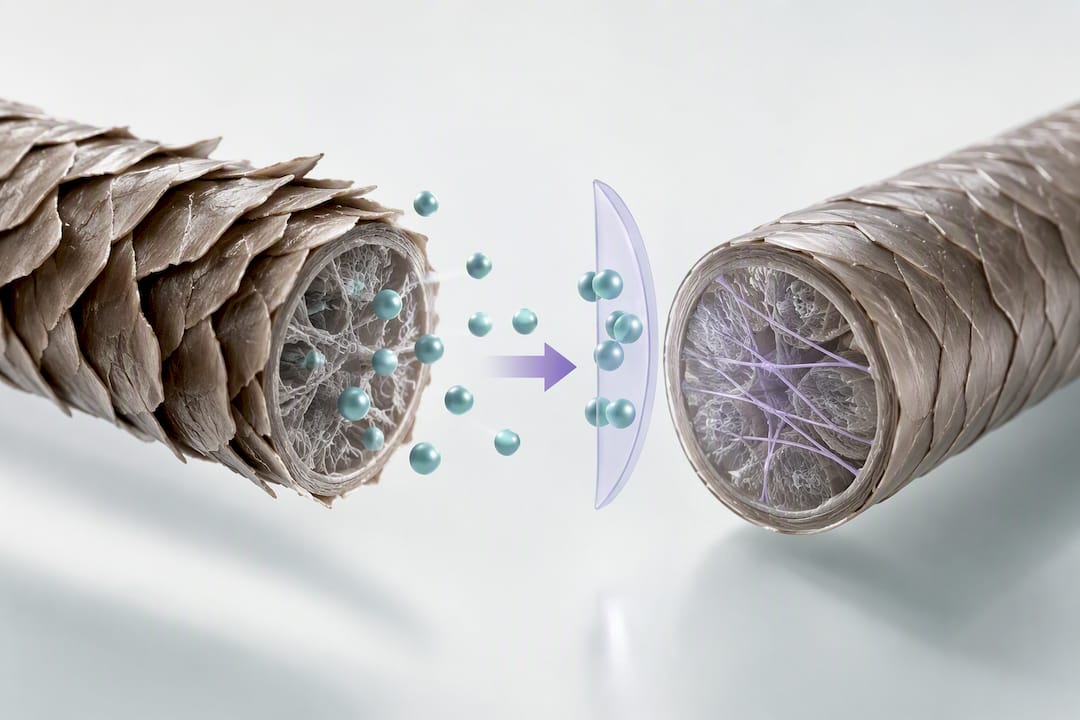
Acid straightening works through a different, more aggressive mechanism. Glyoxylic-acid straighteners require a pH below 2.0 and heat around 200°C to polymerize into a film that locks hair into a new shape. That combination caused protein loss higher than the loss measured with alkaline straighteners in the same study.
None of these mechanisms rebuild broken disulfide bonds or restore hair that has lost structural integrity from bleaching. Acid chemistry reinforces what’s already there. It doesn’t regenerate what’s gone.
What Acid Treatments Can and Can’t Fix
The realistic benefits are worth stating plainly, because marketing tends to overpromise.
- Increased shine and reduced frizz from cuticle smoothing, often visible immediately.
- Easier detangling and reduced mechanical breakage during brushing.
- Modest, measurable strength gains in lab settings, particularly with citric acid on previously bleached or permed hair.
- Reduced porosity, meaning less water and product loss through the cuticle.
How much you gain depends heavily on what your hair has already been through. The 2025 citric-acid research tested high-lift bleached hair, middle-lift bleached hair, permanently colored hair, and permed-plus-colored hair, and found the size of the improvement varied by prior treatment type. That’s the scientific basis for insisting on personalized assessment rather than a one-size-fits-all protocol.
Durability varies just as much by category. Mild acid rinses typically need reapplication every wash or two. Amino-acid bonding masks hold up for two to four weeks before fading. Acid straightening can last three to five months, but that longevity comes with the highest damage risk of the three.
Be skeptical of “permanent repair” claims on any acid product. Lab measurements show reinforcement and reduced protein loss, not permanent structural rebuilding at the molecular level.
Safety, Side Effects, and What Regulators Say
Acid does not automatically mean gentle. The same 2023 fiber study that measured glyoxylic acid’s protein loss also found its damage profile comparable to alkaline straighteners, despite the “acid” label suggesting a softer approach. Low pH plus high heat is its own risk category.
There’s a more serious concern with glyoxylic-acid straightening products specifically. Case reports and animal studies have linked topical glyoxylic-acid exposure to calcium oxalate nephropathy, a kidney condition tied to the compound converting into oxalate and crystallizing. This is a real, documented risk signal, not a theoretical one, and it’s a strong argument for caution with any straightening product listing glyoxylic acid high on its ingredient list.
Formaldehyde is a separate hazard that sometimes overlaps with smoothing treatments. The FDA warns that some hair-smoothing products contain or release formaldehyde when heated, even when labeled “formaldehyde-free.” Watch for alternate names on ingredient lists: methylene glycol, formalin, methanal, and oxymethylene are all functionally the same hazard under different labels.
Before any in-salon acid service, take these steps:
- Request the full ingredient list, the product’s pH, and its safety data sheet (SDS).
- Confirm the salon has adequate ventilation, since inhaled formaldehyde vapor is a workplace hazard under OSHA guidance.
- Insist on a strand test, especially if your hair is bleached, highly porous, or previously chemically treated.
- Disclose your full chemical history to your stylist, including box dye, bleach, and any prior smoothing or relaxing treatments.
Pro Tip: If a stylist won’t show you the SDS or hesitates when you ask what’s actually in the formula, treat that as a hard stop, not a minor inconvenience.
Watch for scalp burning that persists past the rinse, unusual hair breakage in the days after treatment, or any signs of illness following a straightening service, and seek medical attention if symptoms are severe.
How to Choose Between At-Home Products and a Salon Service
Start with an honest inventory: what has your hair already been through, what result do you actually want, how much heat and salon time are you willing to tolerate, and what’s your budget? A porosity test takes five minutes and tells you more about how your hair will respond than any product label.
- Choose a salon service for heavy prior chemistry, significant damage, or if you want acid straightening. Trained application matters when pH drops below 2.0 and heat hits 200°C.
- Choose at-home products for maintenance, mild acidifiers, or amino-acid masks between salon visits.
- Always strand-test first, request the ingredient list and pH, and start with shorter processing times or lower heat than the label maximum.
- Follow up with a moisture-focused routine and give your hair two to three weeks before layering on another chemical service.
Skipping the strand test is the single most common mistake, especially with previously bleached hair.
Where Covalent Grafting Fits Alongside Acid Treatments
Acid treatments reinforce the keratin network from the outside in. QAI Hair’s approach starts differently. The PolyGraft-9 Complex is described as a reactive covalent grafting polypeptide, engineered to bond permanently within the hair’s internal structure rather than sit on the surface or temporarily fill gaps the way amino-acid masks do.
The distinction that matters here is depth. Surface acidifiers change how hair behaves on the outside. A covalent grafting approach is built to address the internal architecture across all three hair layers, which is a different job entirely from cuticle smoothing.
For someone managing bleached or heavily processed hair, that difference suggests a practical pairing: use mild acid rinses or amino-acid masks for routine shine and detangling, and reserve structural repair work for treatments designed to address the cortex directly. Readers considering covalent bonding repair should check product-specific pages for full treatment details.
An Editorial Take on the Acid Treatment Trend
The acid treatment category has a marketing problem: “acid” gets sold as inherently gentle, and the glyoxylic-acid data proves that’s not always true. Evidence-based selection beats trend-chasing every time, and that means reading the actual study data, not just the bottle’s front label.
If your hair has any chemical history, test conservatively and demand transparency from whoever’s applying the product. QAI Hair’s research coverage is a decent place to keep learning the science behind this.
— Kollin Gessler
Maintenance and Repair Products Worth Knowing
Once you’ve settled on an acid strategy, the products you use between treatments decide whether the results hold or fade fast. QAI Moisture Shampoo is built for post-treatment hydration, helping offset the dryness that mild acid rinses and amino-acid masks can leave behind. For cleansing that won’t strip a fresh treatment prematurely, QAI Cleanse Shampoo offers a gentler wash step suited to chemically treated hair.
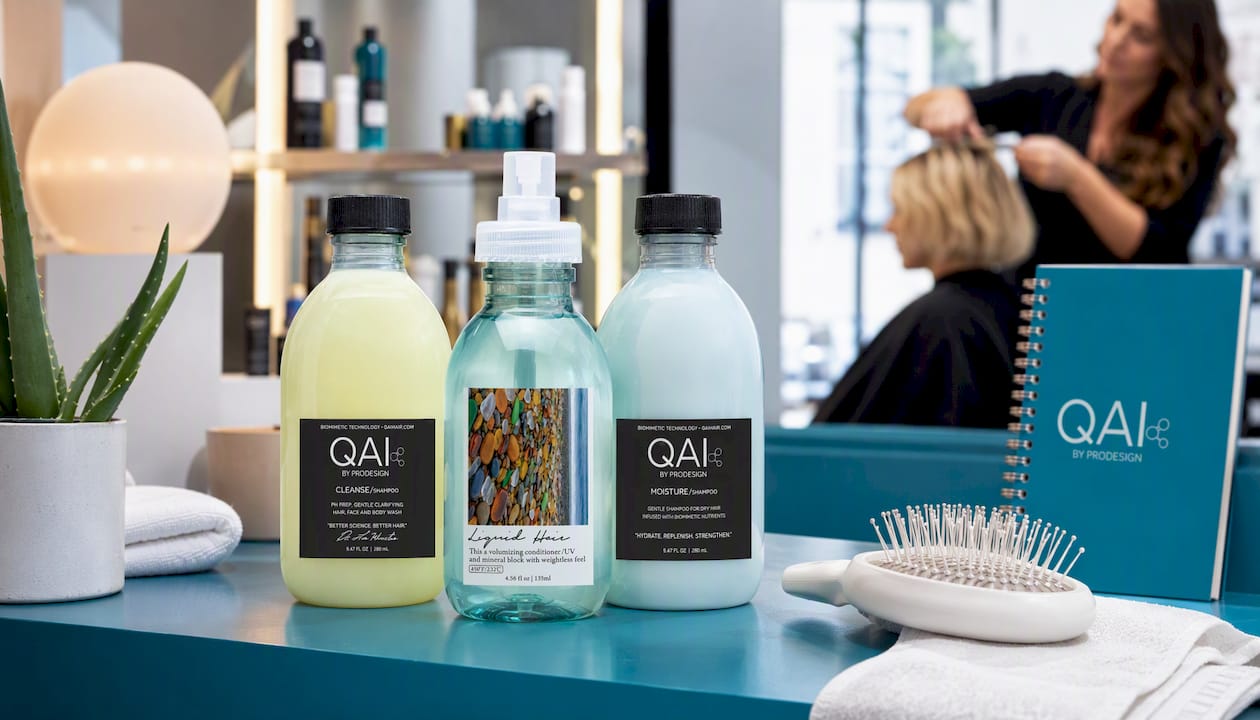
For structural concerns that surface acidifiers can’t reach, QAI Liquid Hair targets porous or damaged strands using the same covalent grafting polypeptide science behind QAI’s professional line. Some brands offer formaldehyde-free smoothing and permanent keratin repair services delivered through licensed stylists, providing structural repair options without carrying formaldehyde exposure risks. Browse the full product lineup or visit the QAI Hair site to find a stylist and plan a treatment suited to your hair’s actual chemical history, not just what a label promises.
Sources
- Reinforcing chemically treated human hair with citric acid
- Impact of Acid (“Progressive Brush”) and Alkaline Straightening on the Hair Fiber: Differential Effects on the Cuticle and Cortex Properties
- Hair-straightening cosmetics containing glyoxylic acid induce crystalline nephropathy
- What Consumers Should Know About Hair-Smoothing Products and Formaldehyde
- Hyaluronic acid for hair: benefits, how to use it, and more
FAQ
Which acid is good for hair?
Citric acid has the strongest lab support for mechanical reinforcement, showing measurable gains in tensile strength and fatigue resistance on chemically treated hair. Hyaluronic acid is better suited for moisture and manageability rather than structural strength.
What are the potential side effects of using hyaluronic acid on my hair?
Hyaluronic acid is generally well tolerated and mainly used to lock in moisture and reduce frizz. Sensitive scalps can experience mild irritation, so a patch test is worth doing before full application.
Can I do an amino-acid smoothing treatment at home?
Yes, amino-acid bonding masks are widely sold for home use and are gentler than salon acid straightening. They won’t produce the same lasting texture change as an in-salon glyoxylic-acid treatment, since they deposit peptides temporarily rather than forming a heat-set polymer film.
Is an amino-acid treatment the same as a keratin treatment?
Not exactly. Traditional keratin treatments often rely on formaldehyde-releasing chemistry to reshape hair, while amino-acid treatments deposit smaller protein fragments without that heat-polymer step. QAI Hair’s permanent keratin repair service is formaldehyde-free, which sets it apart from older keratin smoothing formulas.
How do I know if a salon’s acid straightening product is safe?
Ask for the product’s ingredient list, pH, and safety data sheet before the service begins. Watch specifically for glyoxylic acid, since case reports link it to kidney risk, and for formaldehyde under alternate names the FDA has flagged.
