


Yes. Covalent grafting polypeptide repair permanently rebuilds lost internal structure in severely overprocessed hair, when a trained professional performs it correctly. This is a real chemical fix, not a coating.
It works on hair that fits a specific profile:
- Over-oxidized strands from repeated bleaching or lightening services
- Chemically damaged hair from relaxers, perms, or aggressive color correction
- “Gummy,” overelastic fibers that stretch and don’t spring back
If a client’s hair matches any of those descriptions, the next step isn’t another deep conditioner. It’s a porosity and elasticity test, followed by a professional evaluation to confirm the hair can accept grafting before you commit to a full service.
Key Takeaways
Covalent grafting polypeptide treatments permanently rebuild damaged hair’s internal structure through thiol-based chemical bonds, unlike surface protein treatments that wash out.
| Point | Details |
|---|---|
| Grafting is structural, not cosmetic | Reactive polypeptides form covalent bonds inside the cortex instead of coating the surface. |
| Test before you treat | Run porosity float, tensile stretch, and patch tests before committing to a full service. |
| Sequence around color services | Never combine grafting with bleach or permanent color in one step; buffer between them. |
| Charge selectivity prevents overload | The polypeptide targets oxidized, damaged sites, avoiding the classic over-proteinized, brittle result. |
| QAI Tiger Moisture Mist supports aftercare | Its oil-free lipid barrier protects grafted sites and maintains porosity balance between services. |
What Protein Overload Hair Actually Means in Covalent Grafting
In the professional repair world, “protein overload hair” isn’t about hair rejecting too much protein. It refers to hair so structurally compromised that ordinary protein treatments can’t reach the damage. The industry term for the fix is covalent grafting, and the technology driving it is PolyGraft-9.
Traditional keratin treatments and protein masks deposit hydrolyzed protein onto the hair shaft or into surface gaps. It washes out, usually within a few shampoo cycles, because nothing chemically binds it there. Covalent grafting is different. It uses reactive, cysteine-based polypeptides that form actual covalent bonds inside the hair’s alpha-helix structure, the same protein architecture that gives healthy hair its strength and spring.
QAI Hair’s own technical research describes PolyGraft-9 as growing a synthetic polypeptide directly into that alpha-helix, using what the company calls a Covalent Bond Conversion Catalyst to drive the reaction forward. This isn’t cosmetic patching. It’s chemically grafting new structure into fiber that lost its own.
The science behind this isn’t proprietary fantasy. Independent research on reactive keratin derivatives with added sulfhydryl groups found up to 1.7 times improved binding on natural hair and up to 3.6 times improved binding on bleached hair compared to unmodified keratin. That gap matters: bleached, porous hair is exactly the fiber type that needs the strongest possible bond, and thiol-based chemistry delivers it there most effectively.
Three mechanisms make the permanence claim credible:
- Thiol/disulfide exchange: reactive sulfhydryl groups on the polypeptide chemically link to thiols already present in damaged keratin
- Charge selectivity: the reactive polypeptide is drawn toward oxidized, negatively charged sites, meaning it concentrates where damage actually lives
- Controlled oxidation: a buffered activation step softens the cortex just enough to let grafting occur without over-processing intact hair
Graft-yield studies on wool and wool-derived fibers, a close structural cousin to human hair keratin, recorded yields as high as 58.5 percent using thiolated protein derivatives. That’s a meaningful chemical uptake, not a surface film.
Which Clients Are Good Candidates for This Treatment?
Not every damaged head of hair needs covalent grafting, and not every client should get it. Triage starts with a straightforward question: is the damage structural, or is it cosmetic?
Good candidates typically show:
- Extreme porosity, where hair absorbs water almost instantly and dries just as fast
- Low elasticity, meaning strands stretch significantly before snapping or fail to return to original length
- Gummy, overoxidized texture from repeated lightening, common after multiple bleach sessions or long-term blonde maintenance
- A documented history of damage that other treatments failed to fix
Caution cases include clients with active scalp conditions, hair colored or chemically treated within the last 24 to 48 hours (results are harder to predict on unsettled color), a history of scalp or product allergies, or clients who simply want smoother, shinier hair with no real structural damage. That last group is better served by a smoothing or gloss service, not a repair-grade treatment.
Three simple diagnostics settle most judgment calls: the porosity float test (does a clean strand sink or float in water), a strand stretch and tensile check for elasticity, and a small patch service trial on an inconspicuous section before committing to a full head.
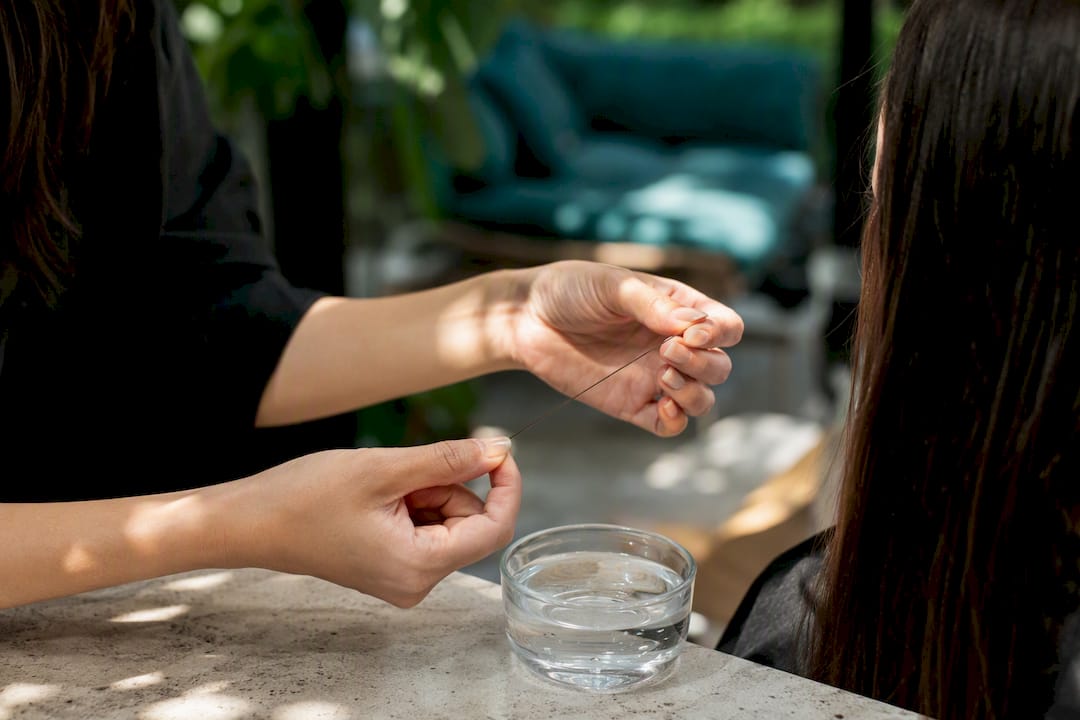
Pro Tip: Run the tensile check on three separate strands from different zones (crown, mid-shaft, and a previously bleached section). Damage is rarely uniform, and a single strand test can miss a compromised area that will affect your final result.
How Does the Salon Treatment Process Work?
A covalent grafting service follows a disciplined sequence, not a one-step application.
- Consultation and history: review chemical history, run porosity and elasticity tests, and get informed consent before starting
- Cleanse: use a reconstructing or clarifying shampoo to remove buildup so the polypeptide can access the cortex directly
- Apply the polypeptide: distribute the reactive PolyGraft-9 formula evenly, concentrating on the most porous or damaged zones
- Apply the catalyst: the conversion catalyst activates the grafting reaction, driving the covalent bond formation
- Controlled activation: follow strict timing and heat parameters, since over-processing at this stage defeats the purpose of a targeted repair
- Rinse and finish: rinse thoroughly, then finish with lightweight styling products that won’t weigh down freshly grafted fiber
A few sequencing notes matter for color and chemical services:
- Grafting generally happens before or after oxidative color services, never simultaneously, since bleach and permanent color chemistry can compete with the grafting reaction
- Buffering steps between services protect both the color result and the graft integrity
- Salon-only formulations like Super Tiger are formulated at higher reactive concentrations than consumer retail products, meant strictly for professional application with proper ventilation and controls
Is Covalent Grafting Safe With Color and Chemical Services?
The classic failure mode in the protein world is “over-proteinizing,” where repeated surface protein applications stack up until hair turns brittle and straw-like. Covalent grafting largely sidesteps this because the reactive polypeptide is charge-selective. It’s drawn to oxidized, damaged sites rather than depositing uniformly across healthy and unhealthy hair alike, so intact strands aren’t loaded with more protein than they can use.
Compatibility with oxidative services follows a few firm rules:
- Never run bleach, permanent color, and grafting as one combined step
- Allow buffering time between an oxidative service and a grafting service, particularly on freshly lightened hair
- Pause grafting on hair with an unresolved allergic reaction history until patch testing clears it
Salon safety basics still apply here as they would with any reactive chemical service: run a patch test 24 to 48 hours ahead of a first-time client, wear gloves when handling catalyst agents, work in a ventilated space, and document each client’s test results and service history.
Pro Tip: Keep a simple porosity and elasticity log for repeat grafting clients. Comparing test results service over service is the clearest way to prove the treatment is working, and it gives you hard data if a client questions the investment.
What Results and Timeline Should Clients Expect?
Measurable improvement in elasticity and tensile strength typically shows up immediately after the first service, with shine and manageability continuing to improve as hair grows out and new grafted structure integrates into the styling routine. Independent research on grafted keratin coatings recorded gloss improvements of roughly 30 percent and frizz reduction near 39 percent, a useful benchmark for the kind of surface and mechanical gains grafting strategies can deliver.
Aftercare matters as much as the service itself:
- Space professional re-evaluation every 6 to 8 weeks for heavily damaged hair, extending as strength stabilizes
- Recommend a gentle, sulfate-conscious at-home routine that won’t strip grafted sites
- Introduce QAI Tiger Moisture Mist as the daily maintenance step, since its ultra-light lipid barrier protects grafted areas and balances porosity without the oils or emollients that weigh down repaired fiber
- Pair with a lightweight styling cream rather than heavier products that mask rather than support the repair
Who’s Behind the Science of PolyGraft-9?
QAI Hair’s polypeptide technology comes from Dr. Lee Hunter, who brings 37 years in personal care chemistry, including leadership roles at Clairol and Redken, to the formulation of PolyGraft-9.
- PolyGraft-9 is described in QAI’s own technical publication as the first reactive covalent grafting polypeptide brought to market for hair repair
- Early salon partners report success repairing hair previously considered unsalvageable, a claim documented in QAI’s launch coverage
- Independent chemistry on thiol-based keratin grafting supports the underlying mechanism, not just the marketing claim
Combining controlled, buffered oxidation with a reactive polypeptide and a conversion catalyst runs against older thinking that oxidation always worsens hair damage. Used deliberately, it makes heavily damaged hair more receptive to permanent repair rather than less.
This article was written by Kollin Gessler, drawing on QAI Hair’s technical documentation as the primary science source.
Why Professional Diagnostics Matter More Than the Chemistry
The chemistry behind PolyGraft-9 is genuinely interesting, but it’s not where most salons lose the plot. The failure point is diagnostics. Too many stylists skip the porosity float test or the tensile check and just eyeball a strand, then wonder why results are inconsistent from client to client.
Generic protein-buildup advice, the kind aimed at consumers managing brittle hair from too many drugstore protein masks, doesn’t apply here at all. That’s a different problem with a different fix. Covalent grafting is a structural repair for hair that has genuinely lost its internal architecture, and treating it like a consumer-grade deep conditioning step undersells what the chemistry can actually do.
If there’s one thing worth prioritizing, it’s this: treat the pre-service test results as gospel, not a formality. A client who tests borderline for elasticity needs a conversation about realistic outcomes, not a full-price service sold on hope. The chemistry earns its reputation only when it’s matched to the right hair in the first place.
— Kollin Gessler
Where Tiger Moisture Mist Fits Into the Protocol
Grafted hair needs protection that doesn’t undo the work. QAI Tiger Moisture Mist delivers moisture and a light lipid barrier without oils or emollients, so it won’t sit on top of freshly grafted sites and interfere with the covalent bonds you just built.
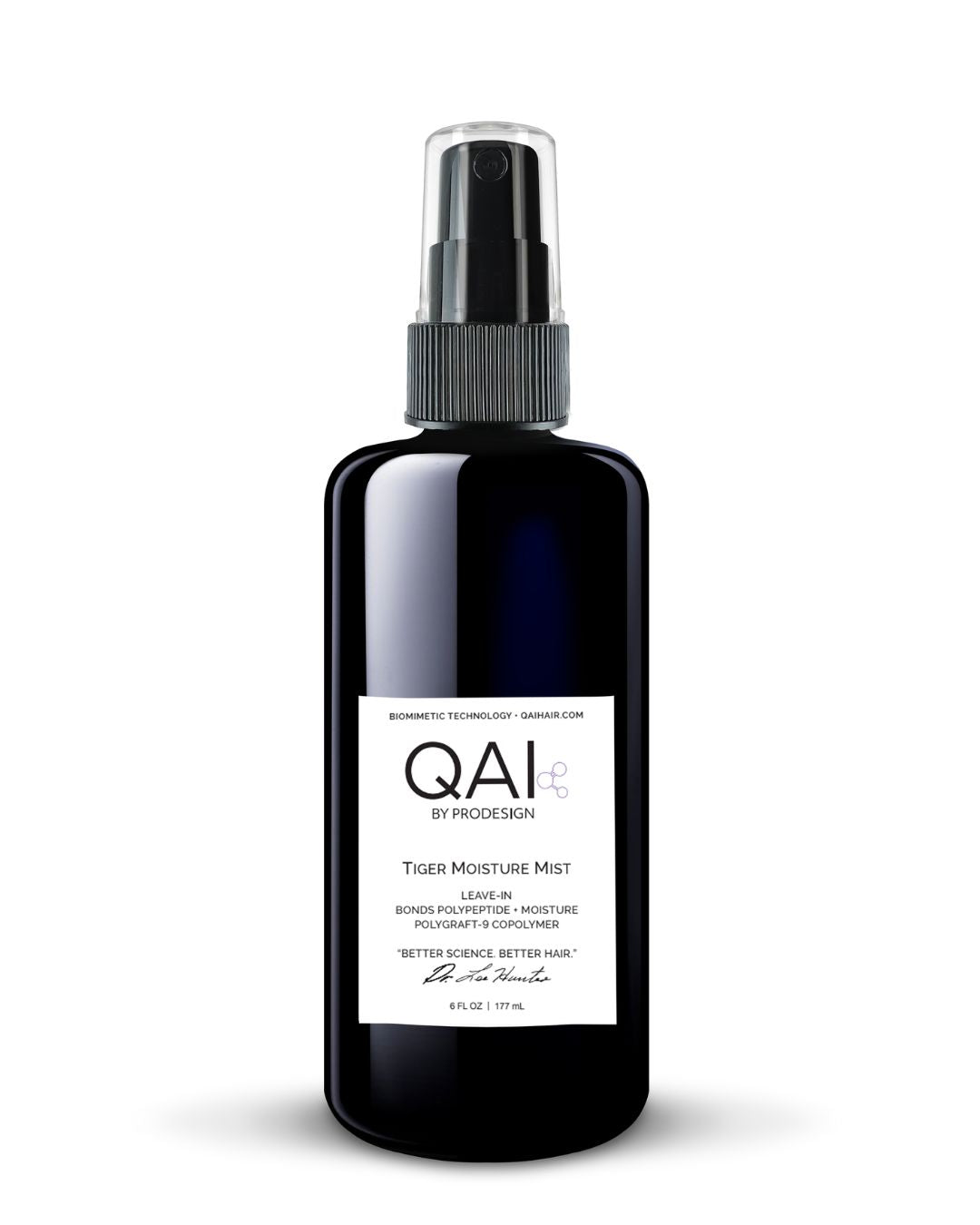
Stylists typically mist it on immediately after the rinse step, then again at the finish, to lock in moisture balance before styling products go on. For at-home maintenance, clients use it between salon visits to keep porosity even and prevent the dryness that often follows a chemical service.
If you’re building a covalent grafting protocol into your salon menu, or you’re a consumer maintaining a recent treatment, the Tiger Moisture Mist product page has full application details and sizing options to get started.

