


Biomimetic hair repair uses peptides engineered to mimic your hair’s own keratin structure, then chemically reconnect broken bonds inside the cuticle and cortex. Peer-reviewed peptide research has measured tensile-strength gains of up to 44% from this approach, and QAI Hair built its Covalent Grafting Polypeptide technology around the same principle. The honest caveat, per Kollin King: this is mechanical repair, not regrowth. Damaged hair gets stronger and more manageable, but it stays the same strand.
TL;DR:
- Biomimetic peptides can penetrate into both the cuticle and cortex, delivering tensile-strength gains of up to 44 percent and reducing breakage by nearly half.
- Their effectiveness is highest on chemically or moderately mechanically damaged hair, with noticeable improvements typically requiring 4 to 8 weeks of consistent use.
- Proper application involves clarifying, applying treatments to damp hair, following leave-in times precisely, and then hydrating to avoid stiffness or over-proteinization.
- Sealant or surface-only products like protein fillers do not penetrate beyond the cuticle, making biomimetic peptides the preferred choice for structural repair.
- Severe damage or structural collapse warrants professional chemical correction services rather than at-home peptide routines.
What Biomimetic Hair Repair Actually Means
“Biomimetic” means the peptide is designed to resemble a fragment of natural keratin closely enough that it binds where keratin already binds. That precision is the whole point. A biomimetic peptide doesn’t just sit on the hair shaft the way a silicone or a heavy protein filler does. It slots into damaged sites the way a matching puzzle piece would, which is why researchers can measure the difference under a microscope rather than just feeling it in a swatch test.
Not every “repair” product works this way, and knowing the category helps you pick the right one:
- Bond builders reconnect broken disulfide bonds inside the cortex, mostly used to buffer chemical services like bleach or perms.
- Protein fillers coat or fill gaps in the cuticle surface, giving a temporary smoothness boost without penetrating deeper layers.
- Biomimetic peptides mimic keratin’s own molecular shape to bind directly at damage sites in the cuticle and cortex.
- Salon structural treatments (keratin repair, corrective services) rebuild larger-scale structural loss chemists can’t reverse with a leave-in.
If your damage is mostly chemical (color, lightening), a biomimetic peptide or bond builder is the logical first move. If you’re dealing with years of heat damage plus chemical history, you may need a layered routine, or a professional corrective service.
The Chemistry Behind the Claims
A 2026 peer-reviewed study in the International Journal of Cosmetic Science tested designed tripeptides, including one called pal-KCV, through mechanical testing and confocal microscopy. The results are the strongest evidence yet that a topical peptide can reach beyond the cuticle surface.
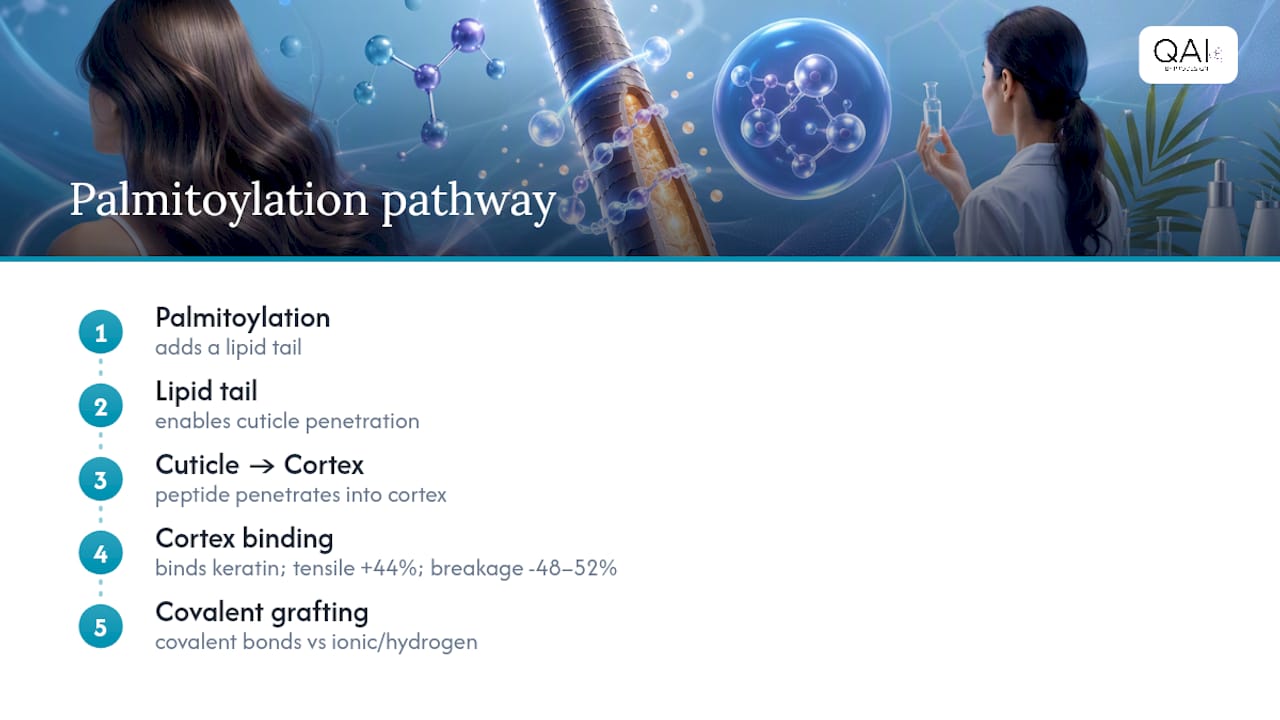
The Wiley-published research found that pal-KCV, a palmitoylated tripeptide, produced the highest binding energy of the peptides tested and improved hair tensile strength by up to 44%, while cutting mechanical breakage by roughly 48 to 52%. Confocal imaging confirmed the peptide had physically penetrated into both the cuticle and the cortex, not just coated the surface.
Key data point: Tensile strength up 44%, breakage down nearly half, with microscopy proof of penetration into the cortex, not just the outer cuticle layer.
Palmitoylation, adding a lipid tail to the peptide, is what makes this possible. That fatty-acid tail helps the peptide cross the hydrophobic cuticle layer and bind more tightly to keratin once inside, a formulation strategy industry analysts point to as a defining feature of the shift toward biomimetic keratin technology over older bond-builder chemistry.
Less snapping when you brush wet hair, fewer flyaway breaks around the crown, and hair that stretches slightly before it fails instead of just giving out. That’s elasticity, and it’s the metric trichologists watch most closely.
QAI Hair’s own approach, the Covalent Grafting Polypeptide behind its PolyGraft-9 Complex, follows the same molecular logic: form a covalent, rather than reversible, bond at the damage site. Covalent attachments are chemically stronger and more persistent than the ionic or hydrogen bonds most bond builders rely on, though any claim of permanence should still be read against independent lab data rather than marketing copy alone.
Who Sees Results, and How Fast
Biomimetic peptides work best on hair that’s chemically or moderately mechanically damaged: color processing, lightening, occasional heat styling, and general dryness from over-washing or sun exposure. If your cortex is severely compromised, think chronic bleach damage stacked with heat and years of tight buns, the ceiling on what any topical peptide can do gets lower fast.
Track these markers rather than just “does it feel softer”:
- Reduced breakage when detangling wet hair (fewer strands in the brush)
- Slower split-end propagation up the shaft
- Better elasticity, meaning hair stretches and springs back instead of snapping
- Visible shine and reduced frizz under humidity
Texture changes often show up within days to a couple of weeks. Structural metrics like elasticity and breakage reduction take longer, typically 4 to 8 weeks of consistent use before you see the full effect.
Pro Tip: If your hair feels improved after one use but reverts within a day, that’s a moisture issue, not a bond issue. Rotate in a hydrating mask before reaching for more protein.
Severe porosity, hygral fatigue (that mushy, waterlogged feeling after every wash), or visible structural collapse along the shaft are signs a topical routine has hit its limit. That’s when a professional keratin repair or chemical corrective service makes more sense than another at-home treatment.
Building a Weekly Biomimetic Repair Routine
Getting real results from biomimetic hair treatment isn’t about buying the right bottle. It’s about sequencing. Apply protein-forward treatments to hair that’s already hydrated, never to dry, thirsty strands, or you risk stiffness instead of strength.
- Clarify first. Use a gentle clarifying wash every one to two weeks to strip buildup so the peptide can actually reach the shaft.
- Apply the peptide or bond-builder treatment to damp hair, following the product’s leave-in time exactly. Rinsing too early is the most common reason people see no change.
- Follow with a hydrating conditioner or mask, never skip this step after a protein treatment, or hair can feel brittle within days.
- Detangle gently with a wide-tooth comb before any heat styling.
- Apply heat protectant every time you use hot tools, no exceptions, since heat undoes peptide gains faster than almost anything else.
Front-load the routine in week one with two to three applications, then drop to once weekly for maintenance. Alternate protein and moisture treatments rather than stacking protein on protein.
Pro Tip: If hair starts feeling hard or straw-like, that’s protein overload, not damage. Skip the next protein treatment and do two moisture-only washes instead.
Salon-applied versions of these treatments use higher concentrations and controlled heat processing, which is why a professional keratin repair treatment can outperform a home version for advanced damage even when the underlying chemistry is similar.
Safety, Side Effects, and the Myths Worth Retiring
Reported reactions to peptide and bond-building treatments are generally mild: occasional scalp irritation, or a short window of increased shedding as weakened strands that were already going to fall out do so faster. That’s different from breakage, which snaps mid-strand rather than releasing at the root.
- Patch test any new formula 24 to 48 hours before full application, especially if you have a sensitive scalp.
- Follow leave-in times exactly. Longer isn’t stronger; it can just mean more irritation risk.
- If you’re shedding heavily at the root rather than seeing mid-shaft breakage, see a trichologist. That’s a scalp or health issue a topical treatment won’t fix.
- Be skeptical of viral claims tying specific bond-builder brands to hair loss or lawsuits. Reports circulating online rarely distinguish normal shedding from product-caused damage, and independent testing on any specific product is the only reliable answer, not social media anecdotes.
Damaged hair is dead protein. No peptide, biomimetic or otherwise, regrows the structure that’s already broken off. What these treatments do is patch and reinforce what’s still there, which is a real result, just not a permanent cure without ongoing maintenance.
Why Biomimetic Peptides Are the Right Next Step, Not a Miracle Fix
The gap between hype and evidence is usually where hair care disappoints people. Biomimetic peptide research clears that bar because it’s measurable: confocal microscopy showing actual penetration, tensile data showing actual strength gains. That’s a meaningfully higher standard than “it feels smoother.” What it demands from you in return is patience and consistency, since one application won’t undo years of bleach and heat. Readers serious about the mechanism should read QAI Hair’s deeper technical breakdown of Covalent Grafting Polypeptide technology before assuming every “bond builder” on a drugstore shelf works the same way.
— Kollin King
Which QAI Hair Product Fits Your Damage
A product line has been built around the same covalent grafting principle described above: bond to the damage site, target all three hair layers, skip the oils and emollients that just sit on the surface. Here’s where each product fits.

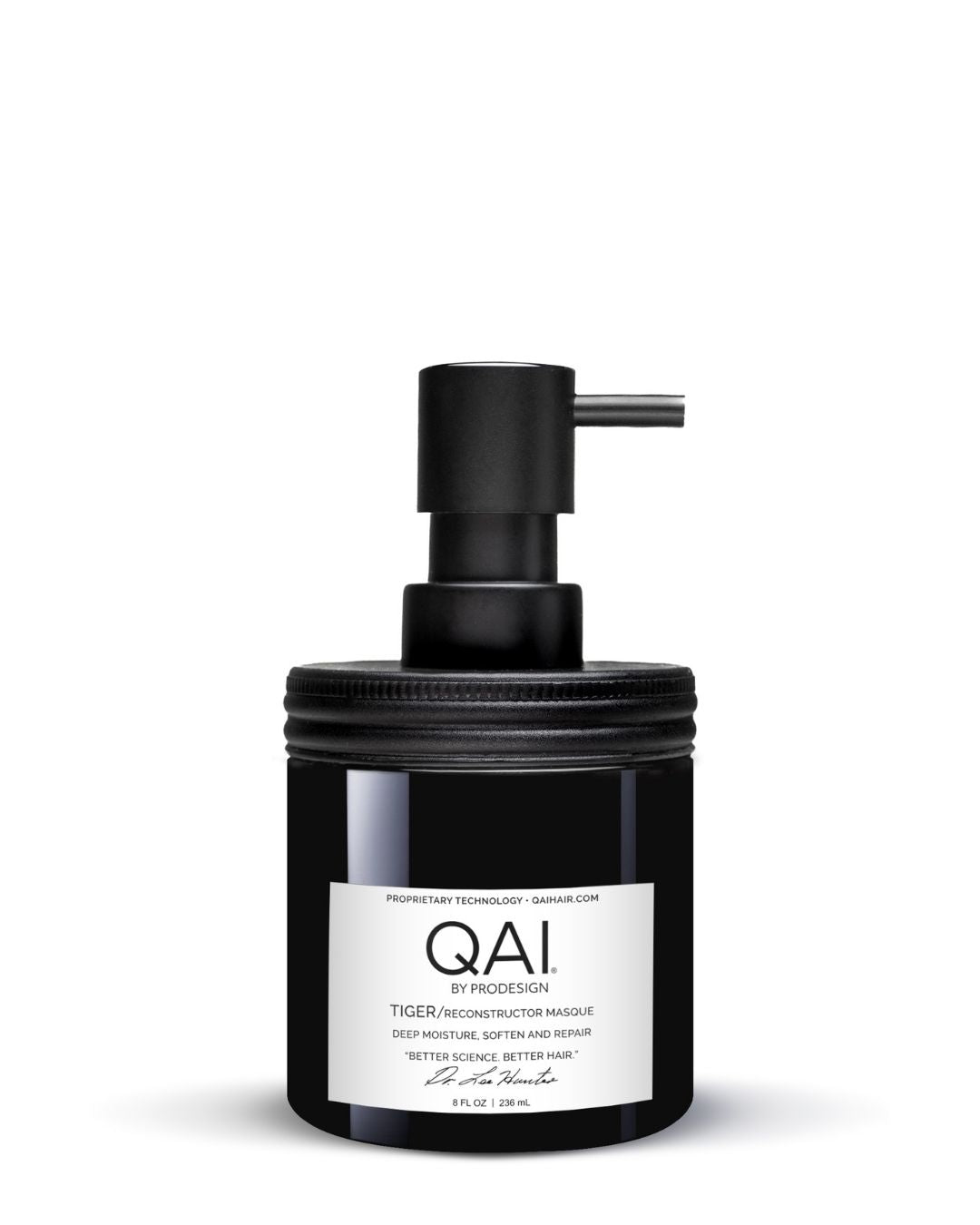
The QAI Tiger Reconstructor Masque is the deep-repair option for heavy chemical or heat damage, the kind where hair feels gummy when wet and snaps when dry. Use it as your weekly front-loaded treatment. The QAI Tiger Reconstructing Shampoo handles daily maintenance, keeping weakened strands supported between deeper treatments without stripping the work the masque already did. For a targeted, leave-in style option between wash days, QAI Tiger Reconstruct delivers the PolyGraft-9 Complex directly to structurally compromised sections without a full rinse-out step.
All three draw on the PolyGraft-9 Complex, a proprietary covalent grafting polypeptide paired with Sea Sand Silicone and Bio Hydroxy Acids to address porosity imbalance at the same time as breakage. If your damage has crossed into structural collapse or severe porosity territory, QAI Hair’s Permanent Keratin Repair and chemical corrective services are worth a professional consult rather than pushing an at-home routine past its limits. Browse the full Tiger Controlled Effects line to match a product to your specific damage profile.
Sources
- Bio‐active designed peptide for hair keratin strengthening - Rha - International Journal of Cosmetic Science - Wiley Online Library
- Synthetic biology approach to biomimetic keratin for advanced hair repair - SOFW Journal
- How to repair damaged hair: A trichologist guide to stronger strands — Walton Surgery
FAQ
What Is the Best Product for Repairing Damaged Hair?
There’s no single best product across every damage type; it depends on whether the damage is chemical, mechanical, or both. For chemically damaged hair with breakage and porosity issues, a biomimetic peptide treatment like the QAI Tiger Reconstructor Masque targets the structural layers where that damage lives, rather than just coating the surface.
Is There a Lawsuit Against K18?
Reports and consumer complaints about various bond-builder brands circulate periodically online, but claims of hair loss are usually difficult to separate from normal shedding or unrelated scalp conditions without independent testing. Readers concerned about a specific product should check that brand’s own safety documentation and consult a trichologist rather than relying on social media reports.
Can Biomimetic Bond Builders Cause Hair to Fall Out?
Bond builders and peptide treatments are designed to strengthen the hair shaft, not affect the follicle or scalp where hair growth originates. Reports of shedding after starting a new product are more often coincidental or tied to scalp irritation than to the treatment itself, though a patch test is a reasonable precaution for sensitive scalps.
How Long Does Biomimetic Hair Repair Take to Work?
Texture and manageability improvements can show up within days to a couple of weeks, but structural gains like reduced breakage and better elasticity typically take 4 to 8 weeks of consistent use to become measurable. One application won’t reverse years of chemical or heat damage.
What Is Biomimetic Hair Therapy?
Biomimetic hair therapy uses peptides engineered to resemble fragments of natural keratin so they bind precisely at damaged sites in the cuticle and cortex. It’s a molecular-repair approach, distinct from surface coatings, and QAI Hair’s Covalent Grafting Polypeptide technology is one proprietary version of it, detailed on the company’s science page.

