


Yes, UV light chemically fades dyed hair and weakens the strand, and the damage compounds every time you’re outside without a barrier. UV rays oxidize dye molecules and break down hair protein at the same time, and neither process reverses itself. The fastest fix is layering two defenses before you step into the sun: a wide-brim hat for physical shade, plus a UV-filtering leave-in or silicone-based barrier on the strand itself. For hair that’s already porous or chronically faded, a reconstructive treatment becomes worth considering.
TL;DR:
- Red and copper hair shades fade fastest, often showing dullness within two to three weeks of sun exposure, especially if unprotected.
- Applying a UV-filtering leave-in product and wearing a hat can significantly reduce pigment oxidation and keratin breakdown during outdoor activities.
- Watering hair before swimming creates a barrier, preventing deeper UV penetration and minimizing damage from chlorine or salt water.
- Reconstructive treatments using PolyGraft-9 technology help repair structural damage, especially in porous or frequently faded hair, supporting longer-lasting color.
- Using cool water, sulfate-free cleansers, and periodic deep repairs slows fading, but multiple stressors like UV rays and washing cause damage that requires structural rebuilding to fully address.
How UVA and UVB Damage Color-Treated Hair
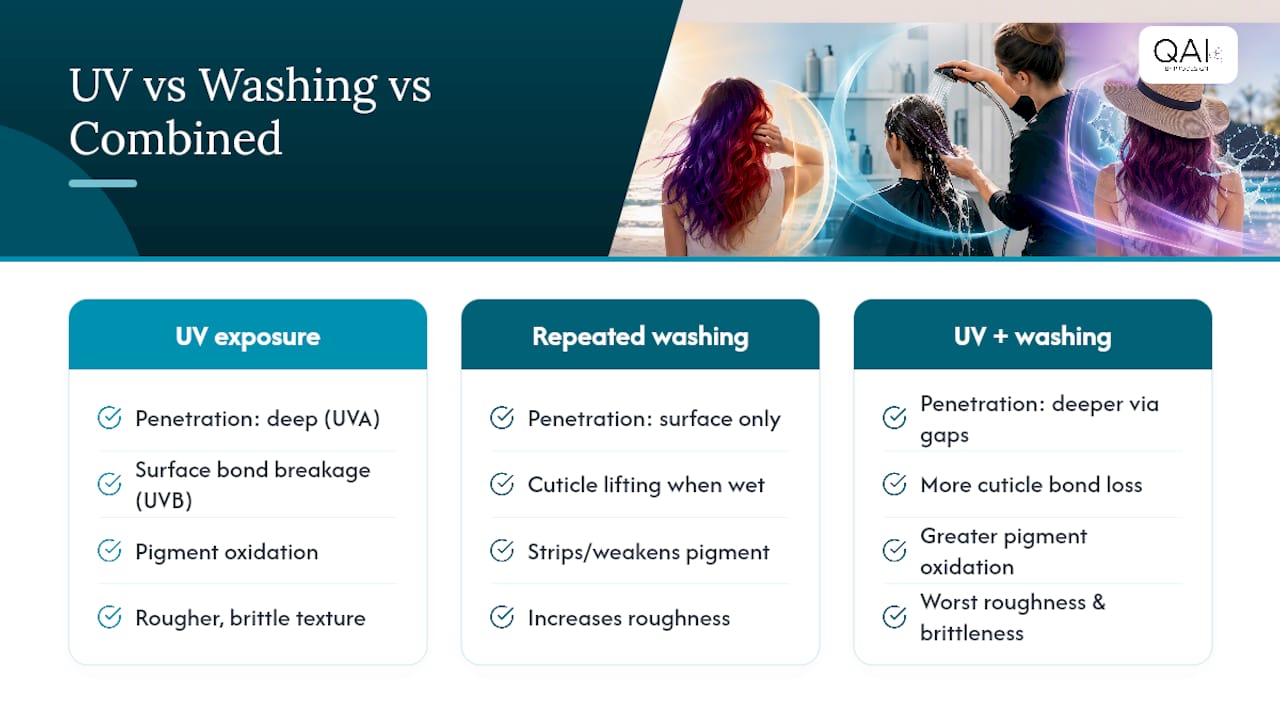
UVA and UVB attack hair differently, and understanding the split explains why sun damage feels so relentless. UVA has a longer wavelength, so it penetrates deeper into the cortex, where it oxidizes melanin and synthetic dye molecules alike. That oxidation is what turns a rich copper into a dull, washed-out orange over a few weeks poolside. UVB, meanwhile, works closer to the surface. It breaks the keratin bonds that hold the cuticle together, which is why sun-heavy hair often feels rougher and more brittle before it even looks visibly faded.
Wet hair makes both problems worse. Water swells the hair shaft and lifts the cuticle, opening gaps that let UV rays reach further into the strand. That’s part of why a single beach day can do more visible damage than a week of ordinary outdoor errands.
None of this damage self-corrects. Hair has no living repair mechanism once a strand leaves the follicle, so once keratin bonds break or pigment oxidizes, prevention is the only lever you actually control before the fact.
The science backs this up with hard numbers. Research on UV radiation and hair protein confirms that UV exposure reduces strength, elasticity, and smoothness in the hair shaft, and the effect accumulates with dose. It gets worse in combination: a study in the International Journal of Cosmetic Science found that hair exposed to both UV irradiation and repeated washing showed significantly greater color change than hair exposed to either stressor alone, with measurable color shifts (dE values) appearing after a few to several tens of hours of intense weatherometer exposure. Wash your hair right after a day in strong sun, in other words, and you’re stacking two fading mechanisms instead of one.
Which Colors Fade Fastest, and How Soon You’ll See It
Not every shade fades at the same rate, and knowing where your color sits on that scale helps you decide how aggressively to protect it.
- Red and copper tones fade first. These dyes use smaller, less stable pigment molecules, so they’re often visibly duller within two to three weeks of regular sun exposure.
- Bleached and toned blondes turn brassy fast. The violet or blue toner that neutralizes yellow breaks down before the underlying lightened hair does, so brassiness can show up in as little as one to two weeks.
- Dark, single-process colors hold their hue longer but lose shine and depth first. The color looks intact, but hair looks flatter and less reflective.
- A single high-exposure weekend, like a beach trip or a week at altitude, can do more visible damage than months of routine daily sun. The effect is cumulative but front-loaded by intensity, not just time.
If you colored your hair in May expecting it to hold until September, one unprotected pool weekend can undo most of that runway.
Your Sun and Swim Protection Routine
Treat this as a sequence, not a shopping list. Order matters here more than in most beauty routines.
- Before you go out or swim, saturate hair with fresh water. Pre-wetting fills the hair shaft with clean water so it absorbs less chlorine or salt water later, since hair can only hold so much liquid at once.
- Apply a UV-targeted leave-in or a thin silicone layer. Look for ingredient decks listing UV filters (benzophenone-type compounds), antioxidants, or silicones like dimethicone and dimethiconol, which have been shown to reduce UV- and wash-driven color change in formulation testing.
- Wear a hat or protective style during peak sun hours, roughly 10 a.m. to 4 p.m., when UV intensity is highest.
- Rinse immediately after swimming, before chlorine or salt has time to sit on oxidized pigment.
- Follow with a moisturizing or protein mask, not a clarifying shampoo, unless buildup is visible.
Pro Tip: Don’t overdo the clarifying shampoo the moment you get home. Clarifiers strip buildup effectively, but used too often on already sun-stressed hair, they strip moisture right along with it, leaving color-treated strands rougher and more prone to further fade.
Daily and Weekly Care That Slows the Fade
Your day-to-day habits either protect the work your sun routine is doing or quietly undo it. The goal is fewer, gentler washes and periodic deeper treatments, not a longer product list.
- Wash less often, and always with cool water. Hot water opens the cuticle further, accelerating the same pigment loss that UV already causes.
- Choose sulfate-free, color-safe cleansers. Sulfates strip color faster than gentler surfactants, undoing sun-protection efforts within a single wash cycle.
- Add a weekly bond-repair or moisture-protein mask if hair feels porous or damaged, since these treatments rebuild what daily UV and washing wear down.
- Clarify only once or twice a month if you swim regularly, and always follow immediately with a restorative mask to replace what the clarifier removes.
- See a professional stylist when home care stalls. If fade keeps returning within weeks of a color service despite a consistent routine, a color-locking or repair treatment addresses structural damage that leave-ins alone can’t fix.
How PolyGraft-9 Fits Into Color Protection
Most sun-defense products work at the surface, coating the strand to slow damage. QAI Hair’s approach targets the structure underneath. The brand’s PolyGraft-9 Complex is a reactive covalent grafting polypeptide, described as a technology that permanently bonds into damaged sites within the hair rather than sitting on top of it.
QAI Hair positions PolyGraft-9 as a structural repair approach that rebuilds the hair’s internal network, supporting color vibrancy and reducing porosity-driven fade when used in reconstructive treatments, according to the brand’s own technology page.
For hair that’s chronically porous, or that fades within weeks of every color appointment despite good sun habits, a reconstructive treatment addresses the underlying structural gaps that let pigment escape in the first place. Dr. Lee Hunter, who developed the system after decades in professional color care at brands including Clairol and Redken, built the formula specifically around targeting all three hair layers rather than just smoothing the surface.
The One Rule Worth Remembering
If there’s one sentence to carry into summer, it’s this: protect daily, repair when visible damage returns. A hat and a five-second leave-in application cost you almost nothing and prevent more fade than most product upgrades ever will. Save the deeper reconstructive step for when mechanical prevention stops being enough on its own, and talk to a professional stylist if color keeps dropping out within weeks of application.
— Kollin Gessler
Keep Your Color Longer With QAI Hair’s Repair Line
A repair option exists for color-treated hair that focuses on structure, not just surface shine, using PolyGraft-9 technology similar to what is used in some professional treatments.
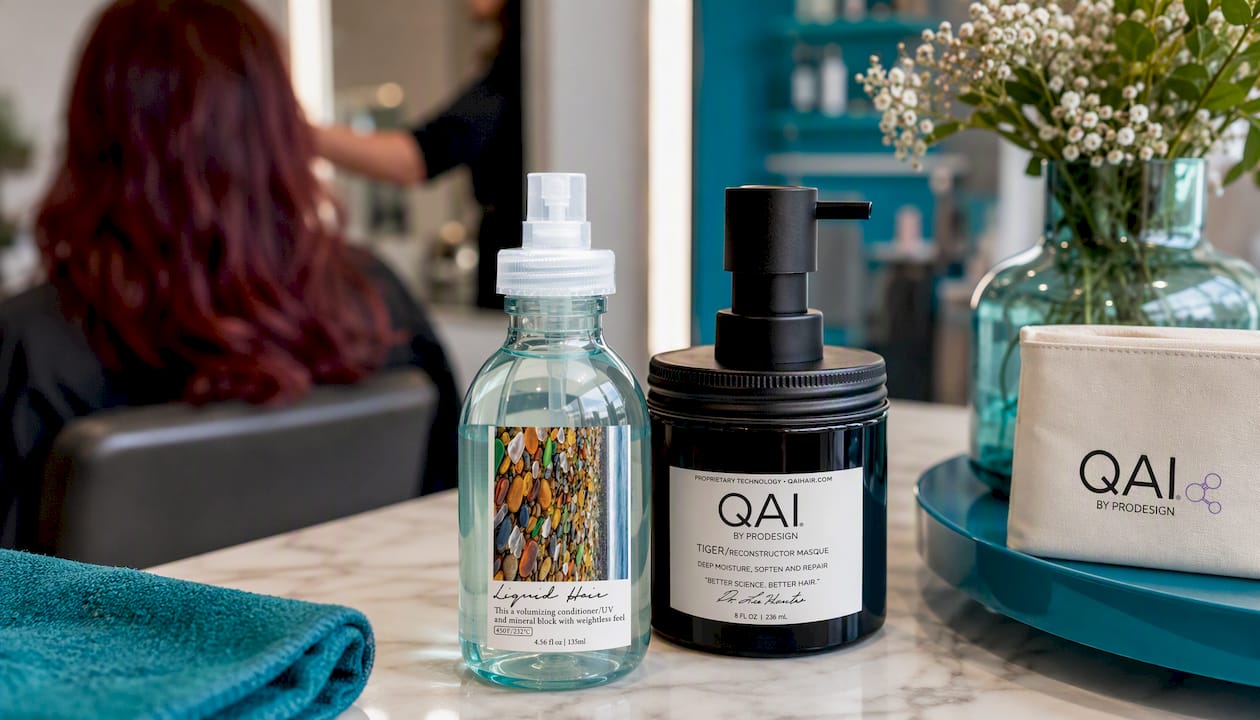
QAI Liquid Hair works as a daily leave-in that fits right into the before-sun and before-swim steps outlined above, giving strands a protective layer without the heaviness of oils or emollients. For deeper restoration after a summer of sun and chlorine, the QAI Tiger Reconstructor Masque delivers the weekly reconstructive step porous, color-treated hair needs to hold pigment and rebuild strength between salon visits. Both products are formulated for use at home or as part of a professional service. If your hair needs more than home care, either from repeated bleaching, chemical damage, or color that won’t hold, explore QAI Hair’s treatment and product lineup to find the right starting point, or browse the full Tiger Controlled Effects collection for bundled repair options.
Sources
- Ultraviolet radiation and hair protein damage (PubMed)
- Hair-colour change under irradiation and washing (International Journal of Cosmetic Science, 2006)
- Study on silicones and photoprotection (Wiley)
FAQ
How Do I Stop My Hair Color From Fading in the Sun?
Layer a physical barrier with a chemical one: wear a hat during peak sun hours and apply a UV-filtering leave-in or silicone-based product before you go outside or swim. Rinse immediately after swimming and follow with a moisturizing mask rather than letting chlorine or salt water sit on the strand.
What Are the Negative Effects of UV Light on Hair?
UV exposure oxidizes melanin and synthetic dye pigment while breaking down keratin protein bonds, leading to dullness, brittleness, and reduced elasticity. This damage is cumulative and does not self-repair, which is why prevention matters more than any after-the-fact fix.
Why Is My Hair Color Fading After Only Two Weeks?
Red, copper, and toned blonde shades use pigment molecules that break down faster under UV exposure and frequent washing, sometimes showing visible fade within two to three weeks. Combining UV exposure with regular shampooing accelerates this further, since studies show washing plus UV causes more color change than either factor alone.
Why Is My Hair Color Fading So Quickly Overall?
Fast fading usually comes from a combination of sun exposure, hot water washing, and skipping protective products, all of which strip or oxidize pigment at the same time. Switching to cool water, sulfate-free cleansers, and a UV-protective leave-in slows the process significantly, and a reconstructive treatment like the QAI Tiger Reconstructor Masque can help when porosity is part of the problem.
Does Wet Hair Fade Faster in the Sun?
Yes. Water swells the hair shaft and lifts the cuticle, which lets UV rays penetrate deeper and speeds up both protein damage and pigment oxidation. Pre-wetting hair with fresh water before swimming in chlorine or salt water reduces how much of that damaging liquid the strand absorbs.

