


Mild to moderate elasticity loss usually responds to the right regimen. Severe chemical damage does not reverse in strands that already exist. It only grows out. That distinction changes everything about how you should spend the next eight weeks.
Here’s your immediate plan:
- Diagnose first. Do a wet strand stretch test before buying a single product.
- Stop the damage. Pause heat styling and chemical services for at least two to three weeks.
- Start the correct protocol. Moisture-first if hair snaps dry, protein-first if it stretches like gum.
Expect reduced breakage within 4 to 8 weeks and visibly improved elasticity in new growth by 3 to 6 months, since that’s roughly how long it takes for healthier strands to replace what’s already compromised.
Key Takeaways
Restoring elasticity requires diagnosing moisture versus protein deficiency first, then following a cause-specific regimen for 4 to 8 weeks before expecting visible change.
| Point | Details |
|---|---|
| Test before treating | Run the wet strand stretch test on root, mid-shaft, and ends before choosing any product. |
| Match cause to fix | Snapping hair needs moisture-first care; gummy, over-stretched hair needs protein-first treatment. |
| Set realistic timelines | Expect less breakage in 4 to 8 weeks and improved new-growth elasticity in 3 to 6 months. |
| Know the repair ceiling | Severely bleach-damaged strands won’t return to virgin condition; new growth is the real fix. |
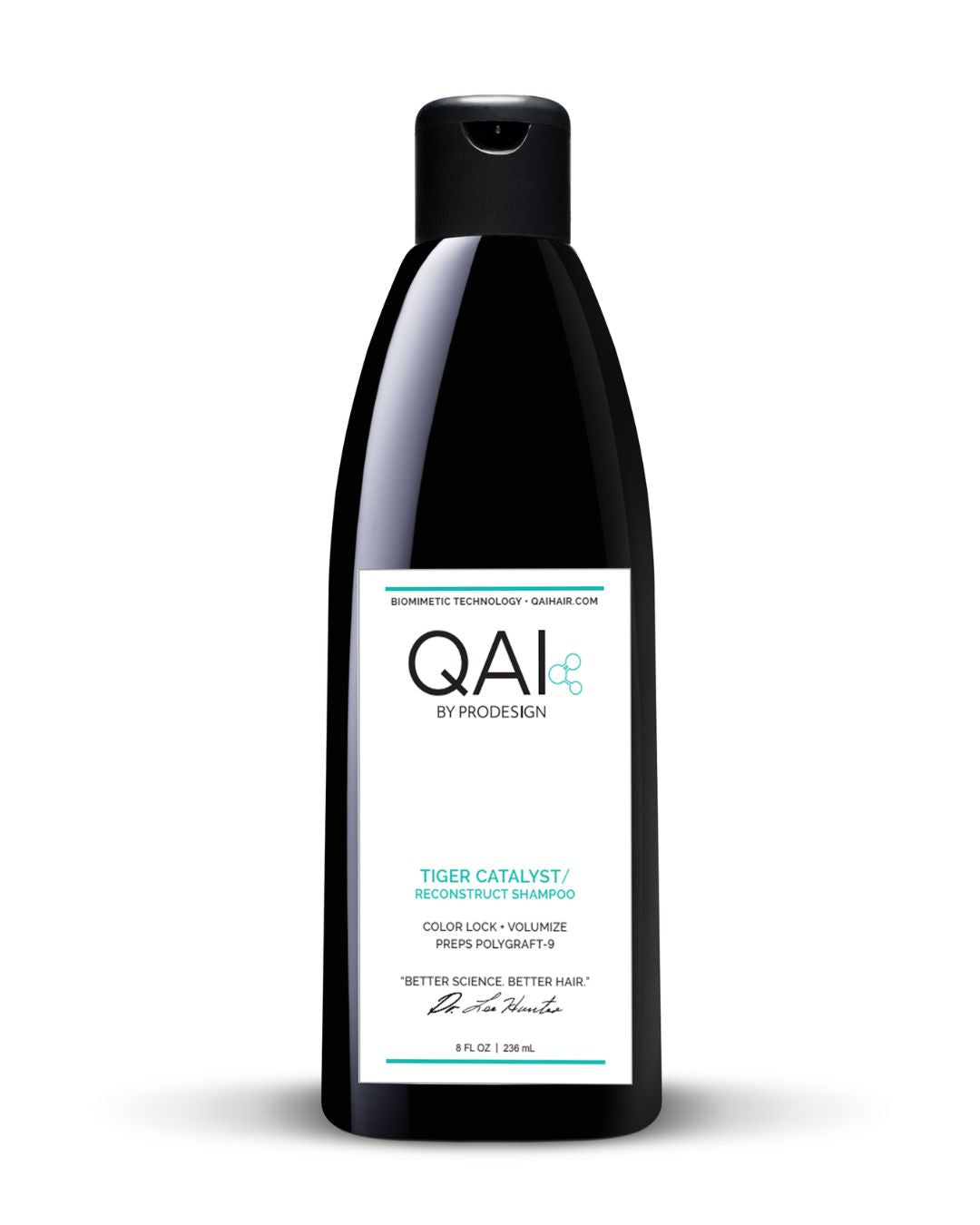
| Reach for reconstructive support | QAI Hair’s Tiger Reconstructing Shampoo, Reconstructor Masque, and Controlled Effects bundles target moisture-deficit and chemically damaged hair specifically. |
What Hair Elasticity Is and Why It Determines Breakage
Hair elasticity is a strand’s ability to stretch under tension and spring back to its original length without snapping. That ability comes down to chemistry inside the cortex, the middle layer of the hair shaft where keratin proteins link together through disulfide bonds.
Those bonds, along with the overall keratin structure, are what give hair its tensile strength and flexibility. When they’re intact and hair holds enough moisture, strands act like a rubber band: they give a little, then recover. When bonds break down from heat, chemical processing, or sustained dryness, that recovery stops happening. The strand either resists stretching at all and snaps, or it stretches too far because the internal protein structure has thinned out.
Moisture and protein work as a balance, not a checklist. Too little of either one throws elasticity off in a different direction, which is why generic “healthy hair” routines often fail to fix a specific elasticity problem.
Here’s what that imbalance looks like day to day:
- Hair that feels springy when wet and smooth when dry usually has good elasticity.
- Hair that snaps immediately with little stretch, especially when wet, is typically dry or protein-overloaded.
- Hair that stretches significantly before breaking, or feels gummy and mushy when wet, usually lacks protein structure.
- Frizz that reappears within hours of styling often signals a moisture deficit at the cuticle level.
- Dull color and rough texture along the length, not just the ends, point to cumulative cortex damage.
Types of Elasticity Problems and How to Recognize Them
Not all elasticity loss looks the same, and treating the wrong type makes things worse. The two failure modes sit at opposite ends of the same spectrum.
Brittle, low-elasticity hair snaps almost immediately when stretched, feels rough or straw-like even after conditioning, and tends to break mid-shaft rather than at the ends. This pattern usually points to dryness, cuticle damage, or a buildup of protein without enough moisture to balance it.
Gummy, over-elastic hair stretches noticeably before breaking, feels slippery or mushy when wet, and often shows visible thinning or see-through patches along the strand. This is a protein deficiency, most often from bleach, chemical relaxers, or repeated heat that has broken down the internal keratin structure faster than it can rebuild.
A single head of hair can show both patterns depending on where you check.
- Roots: Usually reflect your most recent months of growth. Healthy roots with damaged mid-shafts point to a past event, like a bleach service, rather than an ongoing problem.
- Mid-shaft: The most common failure point and the best place to judge your overall elasticity status.
- Ends: Almost always the most damaged section simply from age and repeated handling. Don’t judge your whole head by your ends alone.
Pro Tip: Test three separate sections, root, mid-shaft, and ends, on the same day. If your roots feel gummy but your ends snap dry, you’re dealing with two different problems that need two different fixes, not one product.
Common Causes That Reduce Elasticity
Most elasticity loss traces back to a short list of repeat offenders, and each one comes with a different recovery window.
- Repeated heat styling breaks down the cuticle and dries out the cortex over time. Flat irons and blow-dryers used at very high temperatures do the most damage.
- Chemical treatments like bleach, relaxers, and permanent color break disulfide bonds directly. This is the deepest form of structural damage.
- Environmental exposure, including UV radiation and chlorinated pool water, oxidizes proteins and strips natural moisture over months of cumulative exposure.
- Nutritional and hormonal factors, since hair is roughly 95% keratin, and inadequate protein or micronutrient intake shows up in weaker new growth rather than in strands you already have.
- Overcorrecting with one product type, like layering protein treatment after protein treatment, or drenching hair in heavy moisture without ever rebuilding structure.
Recovery timing depends entirely on which of these applies to you. Reduce heat and chemical exposure and you can typically see less breakage within 4 to 8 weeks. Correct a nutritional deficiency and the improvement shows up almost exclusively in new growth over 3 to 6 months, not in hair that’s already on your head. Severe bleach damage is the outlier: strands that have lost most of their internal protein structure won’t regain virgin-level elasticity no matter what you apply. At that point, the honest advice is trim and regrow, not chase a full reversal.
How to Test Your Hair’s Elasticity at Home and in a Salon
You don’t need lab equipment to get a reliable read on where your hair stands. The wet strand stretch test is the same basic method stylists use, just without the salon lighting.
- Wash your hair or wet a single strand thoroughly. Elasticity shows up most clearly when hair is saturated.
- Isolate one strand from a clarified, product-free section, ideally mid-shaft.
- Hold both ends gently and stretch it slowly, watching how far it extends before resisting.
- Release and observe: does it snap back close to its original length, stay stretched out, or break?
- Repeat on at least two more sections (root and ends) to see if the pattern is consistent.
A strand that stretches slightly and returns is healthy. One that snaps almost instantly is low elasticity and moisture-starved. One that stretches significantly, then breaks or stays elongated, has a protein deficit.
Salons go a step further with in-chair diagnostics: porosity mapping across sections, protein-versus-moisture assessment using diagnostic sprays, and consultations built around bond-rebuilding technology for clients with chemical or heat history. A stylist can also spot damage patterns you’d miss on your own, like uneven porosity from a prior color correction.
Pro Tip: If your hair carries heavy product buildup, do a clarifying rinse before testing. Silicones and styling residue can make damaged hair feel falsely smooth and skew your read on real elasticity.
Diagnose First, Then Follow a Cause-Specific Plan
The single most common mistake in restoring elasticity isn’t a bad product. It’s skipping the diagnosis and guessing. Applying protein to hair that’s already protein-dense makes it stiffer and more prone to snapping, not less.
Here’s the decision flow that actually works:
If your hair snaps dry with minimal stretch, you’re moisture-first. Focus on humectants, sealing oils, and reducing anything that strips natural oils, like sulfate-heavy shampoos or frequent clarifying washes.
If your hair stretches like gum and feels mushy wet, you’re protein-first. You need bond-building or reconstructing treatments that reintroduce structural keratin, not another deep conditioner loaded with fatty alcohols.
If you see both patterns in different sections, treat them separately rather than picking one product for your whole head. Alternate protein and moisture weeks, and pay attention to how each section responds rather than assuming uniform treatment will work.
A few practical rules keep this from going sideways:
- Don’t apply protein treatments more than once every one to two weeks if your hair is already leaning brittle; overuse creates rigidity that looks like strength but behaves like glass.
- Don’t strip hair with sulfate shampoos multiple times a week if you’re moisture-deficient. Save clarifying washes for buildup removal, not routine cleansing.
- Don’t skip a heat protectant “just this once” while you’re actively trying to rebuild elasticity. One unprotected pass with a flat iron can undo two weeks of careful conditioning.
- Don’t assume a thicker product means a more moisturizing one. Heavy silicones can coat hair without actually restoring internal moisture balance.
- Do reintroduce heat and chemical services gradually once you see consistent improvement in your stretch test, rather than jumping straight back to your old routine.
This is also where reintroducing moisture through a consistent five-step habit, condition after every shampoo, use a leave-in, minimize heat, deep-condition weekly, and refresh with a leave-in spray between washes, does more heavy lifting than any single “miracle” product. It’s boring. It also works.
If you land in protein-first territory, a reconstructing shampoo formulated to restore moisture balance and rebuild structure gives you a foundation that won’t fight against the deep treatment you follow it with.
Pro Tip: Space protein treatments out based on how your hair responds, not on a fixed schedule. If a protein mask leaves your hair feeling stiff or straw-like for more than a day, you overdid it and need a moisture week before trying again.
A Practical Regimen You Can Start This Week
A focused four-to-eight-week plan beats a shelf full of random products. Here’s a structure that matches diagnosis to routine:
- Weeks 1 to 2: Establish baseline. Clarify once to remove buildup, then run your wet strand test on three sections. Cut heat styling to two sessions per week maximum, using a heat protectant every time.
- Weeks 2 to 4: Begin your primary protocol. Moisture-deficient hair gets a hydrating mask twice weekly and a daily leave-in. Protein-deficient hair gets a reconstructing treatment once weekly, alternated with a lighter moisture day.
- Weeks 4 to 6: Reassess with another stretch test. Adjust ratios: if breakage has dropped but hair still feels dry, add a sealing oil after conditioner. If it still stretches too far, hold the protein schedule steady rather than backing off early.
- Weeks 6 to 8: Maintain the winning ratio and reintroduce styling tools gradually, always with protection.
Your product shelf doesn’t need to be complicated. A sulfate-free shampoo, a leave-in humectant conditioner, an occlusive sealer for humid climates, a reconstructing masque for weekly deep treatment, a heat protectant you actually apply every time, and a clarifying shampoo used no more than twice a month covers most cases.
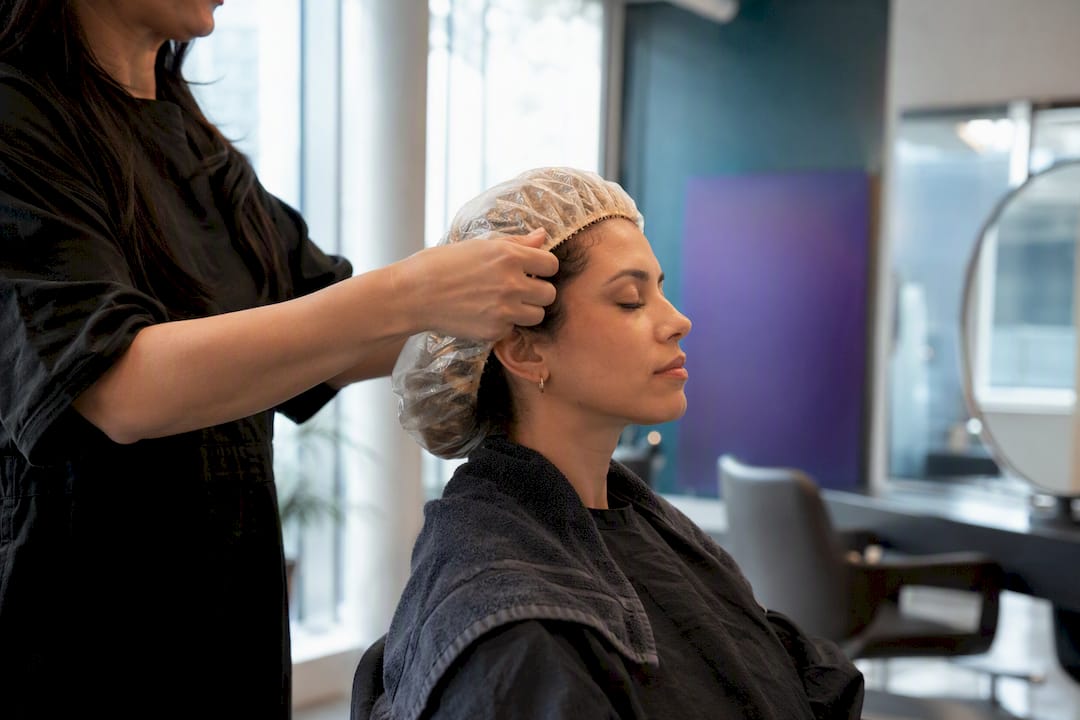
Application details matter more than people assume. Deep masks work faster and more thoroughly with a little warmth, a shower cap or warm towel helps the cuticle open enough for the treatment to penetrate. Leave reconstructing treatments on for the full recommended time rather than rinsing early to save a few minutes, and finish with a cool water rinse to help seal the cuticle back down. If your stretch test shows minimal improvement after six weeks of consistent home care, that’s your signal to book a professional bond-rebuilding treatment rather than keep guessing at home.
Pro Tip: Apply your moisture leave-in to soaking wet hair, not damp hair. Wet hair’s cuticle sits more open, which lets product penetrate instead of just coating the surface.
How Long Restoring Elasticity Actually Takes
Patience matters more here than any single product choice. Recovery timelines split cleanly by cause:
- Heat and environmental damage: Expect noticeably less breakage within 4 to 8 weeks of consistent moisture-first care and reduced tool use.
- Nutritional or hormonal correction: Improvement shows up almost entirely in new growth, typically over 3 to 6 months, tracking with your natural hair growth cycle.
- Chemically over-processed strands: Existing hair with severe bond damage generally needs trimming; healthier elasticity arrives with new growth, not a reversal of what’s already there.
Track progress the same way you diagnosed the problem: a monthly stretch test on the same three sections, paired with a quick photo log under consistent lighting. Two data points three months apart tell you far more than daily inspection, which mostly just breeds frustration over normal week-to-week variation.
When to See a Stylist or Medical Professional
Some elasticity problems need more than a regimen adjustment. Watch for these signals:
- Widespread shedding beyond normal daily hair loss, not just breakage concentrated in damaged sections.
- Scalp lesions, persistent redness, flaking, or pain that accompanies hair changes.
- A sudden, dramatic shift in hair texture or elasticity without an obvious styling or chemical cause.
- Symptoms elsewhere in the body, like fatigue, temperature sensitivity, or unexplained weight changes, alongside hair changes.
- No measurable improvement after 6 to 8 weeks of a correctly matched, consistent regimen.
If any of these apply, Hair Loss And Having An Uneven Hairline – Am I Going Bald? recommends a clinical evaluation rather than continuing to self-treat. A dermatologist or trichologist can order lab work, iron studies, a thyroid panel, ferritin, and zinc are common starting points, that a home routine simply cannot diagnose. Expect a scalp exam, a discussion of your medical and styling history, and possibly bloodwork before any treatment plan is set. This is the one scenario where product choice matters less than getting an accurate underlying diagnosis first.
What Hair Science Says About Repair Limits
There’s a hard ceiling on what any topical product can do, and it’s worth understanding before you spend months chasing an outcome that isn’t physically possible.
Elasticity originates from keratin and disulfide bonds inside the cortex, the deepest structural layer of the hair shaft. Once those bonds break from bleach, high heat, or aggressive chemical processing, no leave-in or mask rebuilds the original covalent structure. What topical treatments can do is temporarily bridge gaps, smooth the cuticle, and improve how hair feels and behaves day to day. That’s a real, meaningful improvement in manageability. It is not the same as returning hair to its virgin state.
- Products that “fill” damaged areas improve feel and reduce visible breakage but don’t restore original bond count.
- Professional bond-rebuilding treatments work at a deeper level than most retail products, which is why salons position them as a distinct service tier rather than a home-routine substitute.
- New growth is the only hair on your head with fully intact original bonds, which is why every recovery timeline eventually points back to growth cycles rather than a single treatment.
Bond-rebuilding technology used in professional settings targets this exact gap, offering readers with severe damage a legitimate middle path between waiting out new growth and accepting permanently compromised strands.
Moisture Deficiency vs Protein Deficiency: The Signs That Tell Them Apart
These two problems produce opposite symptoms, and mixing up the diagnosis is why so many routines stall out.
Moisture deficiency shows up as hair that feels rough or straw-like to the touch, even right after conditioning. It snaps quickly and cleanly when stretched, with almost no give beforehand. Frizz returns within hours of styling, especially in humidity, and static is common in dry climates. Color looks dull rather than vibrant, and the hair often feels lighter or more brittle by evening than it did in the morning.
Protein deficiency feels almost the opposite. Hair feels mushy or gummy when wet, sometimes described as feeling like a wet noodle. It stretches noticeably before it breaks, rather than snapping immediately, and once dry it may feel limp or lack any spring or bounce. You’ll often see excessive shedding during detangling and visible thinning or see-through patches, particularly if bleach or relaxers are part of your history.
The fastest way to tell them apart in the moment: wet stretch behavior. Snap fast, no stretch, means moisture. Stretch far before breaking, or feels gummy, means protein. If you genuinely can’t tell, start with a light protein treatment first, since over-moisturizing already-weak protein structure tends to make gumminess worse, while a light protein treatment on dry hair is easier to correct with a follow-up moisture week.
Common Myths About Restoring Hair Elasticity
A few persistent myths send people down the wrong path, sometimes for months.
Myth: More conditioner always means healthier hair. Piling on moisture when your real problem is protein loss makes gummy, over-elastic hair worse, not better. Balance matters more than volume.
Myth: Protein treatments fix all damage. Protein rebuilds structure, but applied to already protein-dense or moisture-starved hair, it creates stiffness and increases breakage. It’s a targeted tool, not a universal fix.
Myth: Elasticity loss is always reversible with the right product. Products improve manageability and reduce ongoing damage. They cannot rebuild disulfide bonds that have already broken in existing strands. That kind of repair only happens through new growth.
Myth: Trimming damaged ends is giving up. Removing severely compromised sections is often the fastest route to hair that behaves consistently, because you stop asking one strand to perform two different jobs.
Myth: Natural hair or virgin hair can’t lose elasticity. Sun exposure, chlorinated water, and even harsh brushing degrade elasticity in hair that’s never seen a chemical treatment. Heat and environment don’t check your color history first.
Myth: If it’s not breaking, it’s fine. Gummy, over-stretched hair often looks intact right up until it isn’t. Elasticity loss is a spectrum, and the stretch test catches problems before visible breakage does.
Why Diagnosis Beats Guesswork Every Time
The gap between people who fix their elasticity problems and people who spend a year cycling through products usually comes down to one habit: testing before treating. Most product-stacking failures aren’t a formula problem. They’re a diagnosis problem, someone with protein-dense hair reaching for another protein mask because the last one “seemed to work” for a week before making things worse.
A stylist I’d trust on this put it simply: the strand test takes thirty seconds and saves months. That’s not marketing language, it’s just arithmetic. Weigh thirty seconds against another failed six-week cycle with the wrong product category.
Set your expectations honestly. The goal isn’t erasing every trace of a bleach job from three years ago. It’s stopping active breakage now and making sure the hair growing in today comes in stronger than what it’s replacing. That’s a realistic, achievable target, and it’s the one that actually holds up over time.
Professional-Grade Options for Persistent or Chemical Damage
If you’ve diagnosed your issue and a home routine still isn’t moving the needle after six to eight weeks, or if bleach and chemical services are part of your history, it’s worth stepping up to reconstructive treatments built specifically for structural repair.
For moisture-deficit hair worn down by heat and environment, the QAI Tiger Reconstructing Shampoo and QAI Tiger Reconstructor Masque work as a pair, cleansing without stripping while rebuilding structure in the same wash session. Chemically tinted or bleached hair needs a different approach entirely, and the Controlled Effects System Tinted/Bleached Formula Bundle combines bond repair with moisture balancing formulated for that specific damage profile. Normal to resistant hair types looking for a complete, guided reconstructive system have the Controlled Effects System Normal/Resistant Formula Bundle, while stylists managing color-treated clients often reach for Tiger Controlled Effects Tinted/Bleached as a salon-grade option. For severe structural compromise where retail products aren’t cutting it, QAI Tiger Reconstruct delivers the professional-strength intervention that bridges the gap while you wait for new growth to catch up.
Take the wet strand test this week, match your result to the bundle above, and start rebuilding from the root.
Sources
- Hair Elasticity: Get Bouncy, Shiny Locks With These Expert Tips
- Hair Elasticity: Meaning, Test and Treatment | Kibo Clinics
- NONE (NCBI Bookshelf resource on hair structure and biology)
This article is general information, not a substitute for advice from a qualified doctor. Consult a qualified healthcare professional about your own circumstances before acting on anything here.

