


The hair elasticity test is a 30-second diagnostic: wet a clean strand, stretch it gently to about a third of its length, and watch what happens when you let go. Bounce back smoothly and you’re balanced. Snap or break and your cortex needs moisture and bond repair. Stretch far and stay elongated, and you’re dealing with moisture overload or protein loss.
Testing wet matters because water temporarily weakens the hydrogen bonds holding the cortex together, giving you a cleaner read on the disulfide bonds and protein structure underneath. Dry hair hides too much.
-
Bounces back: Maintain your current routine.
-
Snaps or breaks: Add moisture and a bond-building treatment, and pause harsh chemical services.
-
Stretches and stays gummy: Clarify, cut back on conditioner, and add light protein.
A 2022 study on bleached hair found that certain low-molecular-weight treatments improved tensile strength in damaged strands significantly, which tells you elasticity loss is fixable in many cases, not just something you have to live with.
Key Takeaways
The wet stretch test works because it isolates cortical bond behavior from surface-level cues, letting you match treatment to the actual type of damage instead of guessing.
| Point | Details |
|---|---|
| Test wet, mid-shaft | Hydrogen bonds weaken when wet, giving a truer read of cortex health than dry or end testing. |
| Watch the 30% mark | Healthy hair stretches roughly 20% to 30% and snaps back quickly without breaking. |
| Match treatment to pattern | Snapping needs moisture and bond repair; gummy, over-stretched hair needs clarifying and light protein. |
| Retest on a schedule | Check weekly during active treatment, monthly otherwise, and log results to track real change. |
| Escalate when needed | The QAI Tiger Reconstructor Masque targets moderate cortex damage, while severe or persistent snapping warrants a salon visit. |
How Do You Perform a Hair Elasticity Test at Home?
Getting a useful answer from this test depends almost entirely on doing it the same way every time. Stylists who run this daily aren’t guessing, they’re following a routine, and you should too.
1. Prep the hair correctly. Wash with a clarifying shampoo to strip product buildup, silicones, and mineral residue from hard water. All of these coat the strand and give you a false reading, either masking real damage or making healthy hair look stiffer than it is.
2. Saturate fully, then wring gently. The strand needs to be completely wet, not just damp. Squeeze out the excess water with your fingers, don’t rub or twist, and test within about 30 seconds of wringing. Hair starts drying (and re-forming those hydrogen bonds) almost immediately, so waiting too long skews your result toward a false “healthy” reading.
3. Pick your test strands from the mid-shaft. Grab three to five strands from different spots: the crown, the nape, and mid-side. Skip the ends entirely (they’re always the oldest, most weathered part of the hair and will make even healthy hair look damaged) and skip the hairline (finer texture there reads differently than the rest of your head).
4. Grip and stretch with control. Wrap the strand around your fingertips, or pinch it between thumb and index finger on each hand, holding roughly two to three inches apart. Pull slowly and steadily until you reach about a third beyond its resting length. Don’t yank. A slow pull to the Hookean region (the zone where hair stretches elastically without permanent damage) is what actually reveals cortical bond density, according to the tensile testing methodology used in peer-reviewed hair research.
5. Release and watch closely. Note how fast it returns, whether it returns at all, and whether it snapped before you even reached the 30% mark.
6. Repeat and log it. Test all three to five strands. If you get three different answers, that’s useful information, not a mistake. Log the date, section tested, and what you observed.
-
Crown strands often show different wear than nape strands, especially if you use heat tools mostly at the front.
-
Color-treated sections and virgin regrowth on the same head can give completely different results.
-
One bad snap on five otherwise-bouncy strands usually means localized damage, not a system-wide problem.
Pro Tip: Test wet for the real diagnosis, but do a quick dry stretch too. Wet testing tells you about the cortex; dry testing shows surface roughness and cuticle condition. Running both gives you the fuller picture stylists rely on.
What Do Your Hair Elasticity Test Results Mean?
Three patterns show up over and over, and each one points to a different repair path.
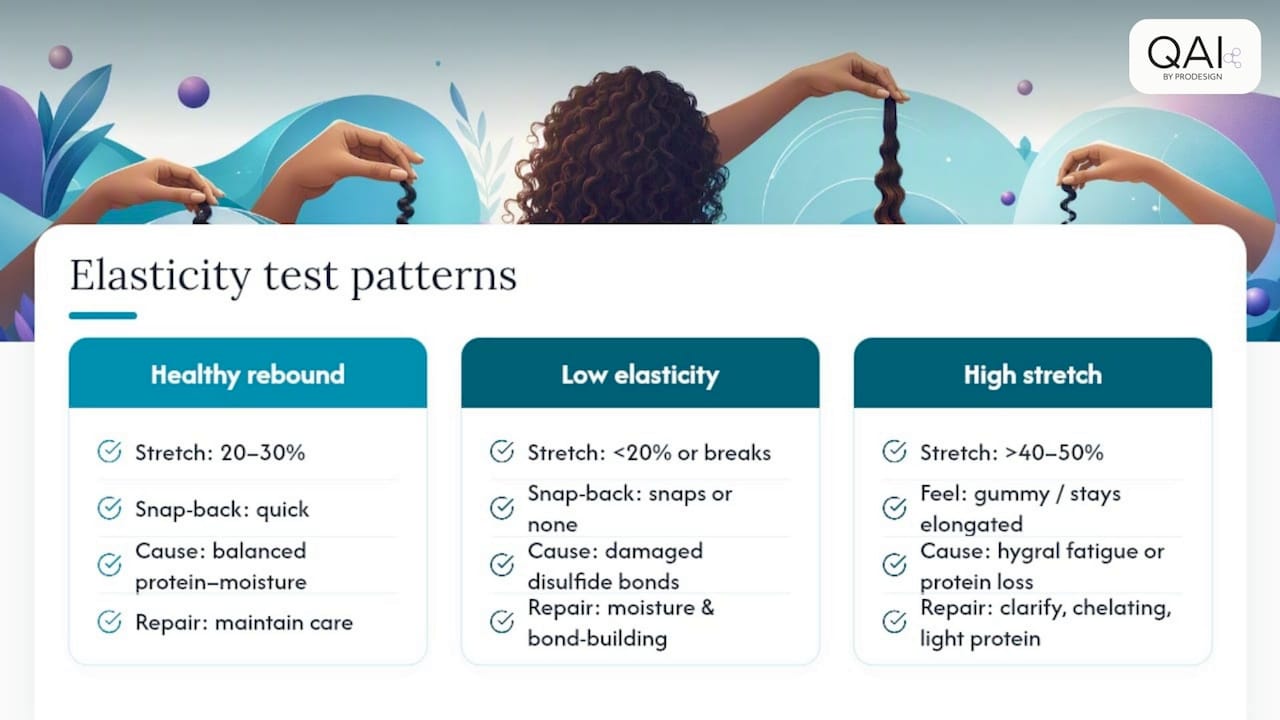
Healthy rebound (roughly 20% to 30% stretch, quick snap-back) means your hair returns to close to its original length almost immediately after release, with no sponginess and no breakage. This is the sign of a reasonably balanced protein-to-moisture ratio inside the cortex. You’re not damage-free forever, but right now, your hair’s internal structure is doing its job.
Low elasticity, snapping, or breaking (under 20% stretch, or an outright break before you reach that range) points to compromised disulfide bonds, the sulfur-based links that give hair its structural backbone. This is classic cortex damage, usually from bleach, heat, or repeated chemical services stacking up over time. It needs moisture and bond-building attention, not more protein piled on top of already-fragile strands.
High stretch or “gummy” feel (beyond 40% to 50%, staying elongated or feeling mushy instead of springing back) signals either moisture overload, sometimes called hygral fatigue, or actual protein loss from over-processing. The strand has absorbed more water than its protein structure can manage. This calls for clarifying, a chelating rinse, and a light protein step, not another deep conditioner.
Mixed results across your test strands are common, especially if you’ve had color, a keratin service, and heat styling all within the last year. Treat the worst-behaving sections first since that’s where the actual risk of breakage lives, and don’t assume the rest of your head needs the same intensity of correction.
What Should You Do Based on Your Test Results?
Your next move depends entirely on which pattern you saw, and using the wrong fix (piling moisture onto already-gummy hair, for instance) can make things worse.
If your hair snapped or showed low elasticity:
-
Add humectant-based leave-ins and deep moisture masks weekly.
-
Pause sulfate-heavy or high-pH shampoos until you see improvement.
-
Cut back on any chemical services (color, relaxing, bleaching) until the strand tests show a better rebound.
-
For significant cortex damage, a professional bond-rebuilding treatment does more than home care alone can manage.
If your hair stretched and stayed gummy:
-
Clarify or use a chelating shampoo right away to strip the excess buildup causing the overload.
-
Reduce conditioning frequency, and switch to a lighter formula for a few weeks.
-
Introduce a light protein treatment and an acidic rinse to help close the cuticle and rebalance the moisture-protein ratio.
-
Pace your rehydration slowly. Going right back to heavy conditioning undoes the correction.
If your hair bounced back normally:
-
Stick with light, regular conditioning and an occasional mask, not a heavy weekly ritual.
-
Protect strands from heat tools and avoid leaving hair wet for extended periods, which invites the same hygral fatigue that causes gummy results.
Know when home care isn’t enough. Persistent snapping after four to eight weeks of consistent care, visible banded breakage along the shaft, or zero improvement despite following the right protocol are all signs a salon consult makes more sense than another round of at-home masks. Research-backed actives like low-molecular-weight hyaluronate and targeted bond-building peptides show real promise for restoring elastic modulus in damaged hair, but they work best paired with professional guidance once damage passes a certain threshold.
Pro Tip: If you’re not sure whether you’re looking at “snap” or “gummy,” check for stickiness. Gummy hair often feels tacky or rubbery when stretched, almost like warm taffy, while snap-prone hair feels tight and brittle right up until it breaks.
How Often Should You Retest and What Throws Off Results?
Run a baseline test before any chemical service, then monthly for general upkeep or weekly while you’re actively treating a problem.
-
Log the date, section tested, and the pattern you observed.
-
Note which products you used that week and anything relevant, like recent color services or a move to a new water supply.
-
Compare notes every two to four weeks to spot real trends instead of one-off results.
Watch for false positives. Silicone buildup, hard water minerals, and testing on the ends instead of the mid-shaft can all make healthy hair look damaged or mask a real problem. A clarifying or chelating wash before testing clears most of these confounders. Expect small shifts within four weeks of consistent treatment, with clearer, more obvious changes by the four-to-eight-week mark. If you’re not seeing any movement by then, that’s your cue to talk to a professional.
What Does the Research Say About Fixing Elasticity?
Low-molecular-weight hyaluronate, at roughly 42 kilodaltons, is small enough to penetrate the hair cortex directly. In controlled testing on bleached hair, it measurably improved both elastic modulus and tensile strength, with the effect showing up as concentration-dependent even at low percentages.
That’s not a marketing claim. It’s a controlled experimental finding from peer-reviewed molecular research, and it’s part of why smaller-molecule actives are getting more attention in reconstructive hair care.
-
The elasticity test tells you what’s damaged, not a guaranteed fix on its own.
-
Severe disulfide bond loss can be permanent without professional-grade intervention, according to review-level research on hair repair mechanisms.
-
QAI Hair’s PolyGraft-9 Complex, developed under Dr. Lee Hunter, was built specifically to address this class of cortex-level damage where home care alone plateaus.
-
Realistic timelines matter: expect gradual improvement over weeks, not an overnight transformation.
Why the Elasticity Test Beats Guesswork Every Time
Most people treat hair damage the way they treat a headache: grab whatever’s on the shelf and hope it helps. That’s backwards. The elasticity test costs nothing and takes less time than reading this sentence, yet it tells you more than a visual inspection or a stylist eyeballing your ends ever could.
Where conventional advice falls short is in treating “damaged hair” as one category. Snap and gummy are opposite problems requiring opposite fixes, and I’d argue that’s the single most misunderstood point in home hair care. Pile more moisture onto hygral-fatigued strands, thinking you’re helping, and you’re actually accelerating the breakdown.
Prioritize the test itself before you buy another product. Diagnosis first, treatment second. Once you know whether you’re dealing with protein loss, moisture overload, or genuine cortex damage, the research on targeted actives like low-molecular-weight hyaluronate becomes a lot more useful, because you’re finally applying it to the right problem instead of a guess.
A Reconstructing Option for Low-Elasticity Hair
If your test came back with snapping, weak rebound, or that telltale immediate break, you’re looking at cortex-level damage that a leave-in conditioner alone won’t reverse. The QAI Tiger Reconstructor Masque is built specifically for this scenario, using QAI Hair’s covalent grafting polypeptide technology to rebuild internal strand structure rather than just coating the surface.
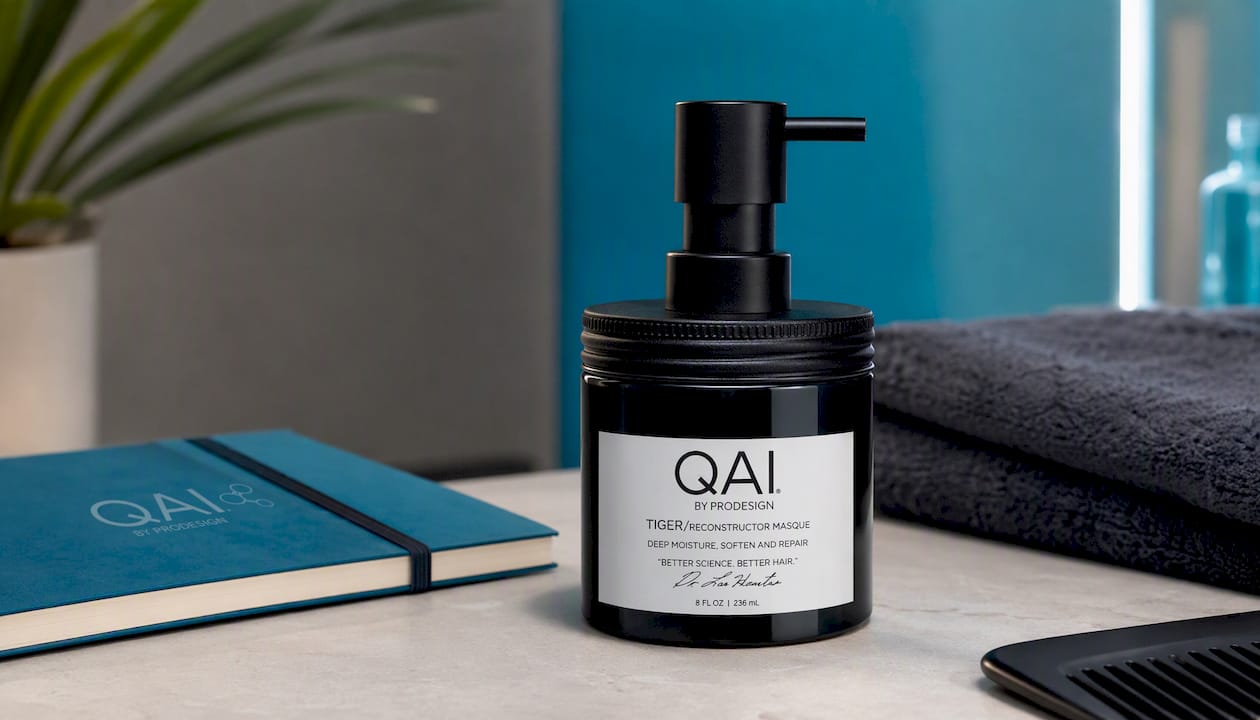
Use it once or twice weekly on damp, freshly washed hair, working it through mid-shaft to ends and leaving it on for the time listed on the packaging before rinsing. Most people testing low elasticity see a noticeably better rebound within a few weeks of consistent use, alongside easier detangling almost immediately. It’s most effective for moderate damage from bleach, heat, or repeated color services. If your strands are still snapping after two months of regular use, or you’re seeing visible banded breaks along the shaft, that’s a sign to book a salon consult rather than keep layering on more product. Pair it with the QAI Tiger Reconstructing Shampoo for a fuller weekly routine, and check the masque’s product page for current sizing and pricing.
Frequently Asked Questions
How often should I do a hair elasticity test? Run a baseline test before any chemical service, then check monthly for general maintenance. Bump that up to weekly if you’re actively correcting damage and want to track progress.
Can I test dry hair instead of wet? Dry testing shows surface roughness and cuticle condition, but it won’t reliably reveal cortex damage the way wet testing does. Use dry testing as a quick secondary check, not your main diagnostic.
Why did my hair test fine on one strand but snap on another? Different sections of your head age and process differently. Crown and nape hair often show different elasticity than hairline strands, especially with heat styling or targeted color application.
Is gummy, over-stretched hair worse than snapping hair? Neither is automatically worse, but they need opposite fixes. Gummy hair needs clarifying and light protein; snapping hair needs moisture and bond repair. Treating one like the other usually makes things worse.
Can hair elasticity actually improve, or is damage permanent? Moderate damage often responds well to targeted treatment. Research on low-molecular-weight hyaluronate shows measurable improvement in elastic modulus and tensile strength on bleached hair, though severe disulfide bond loss may need professional correction to fully resolve.

